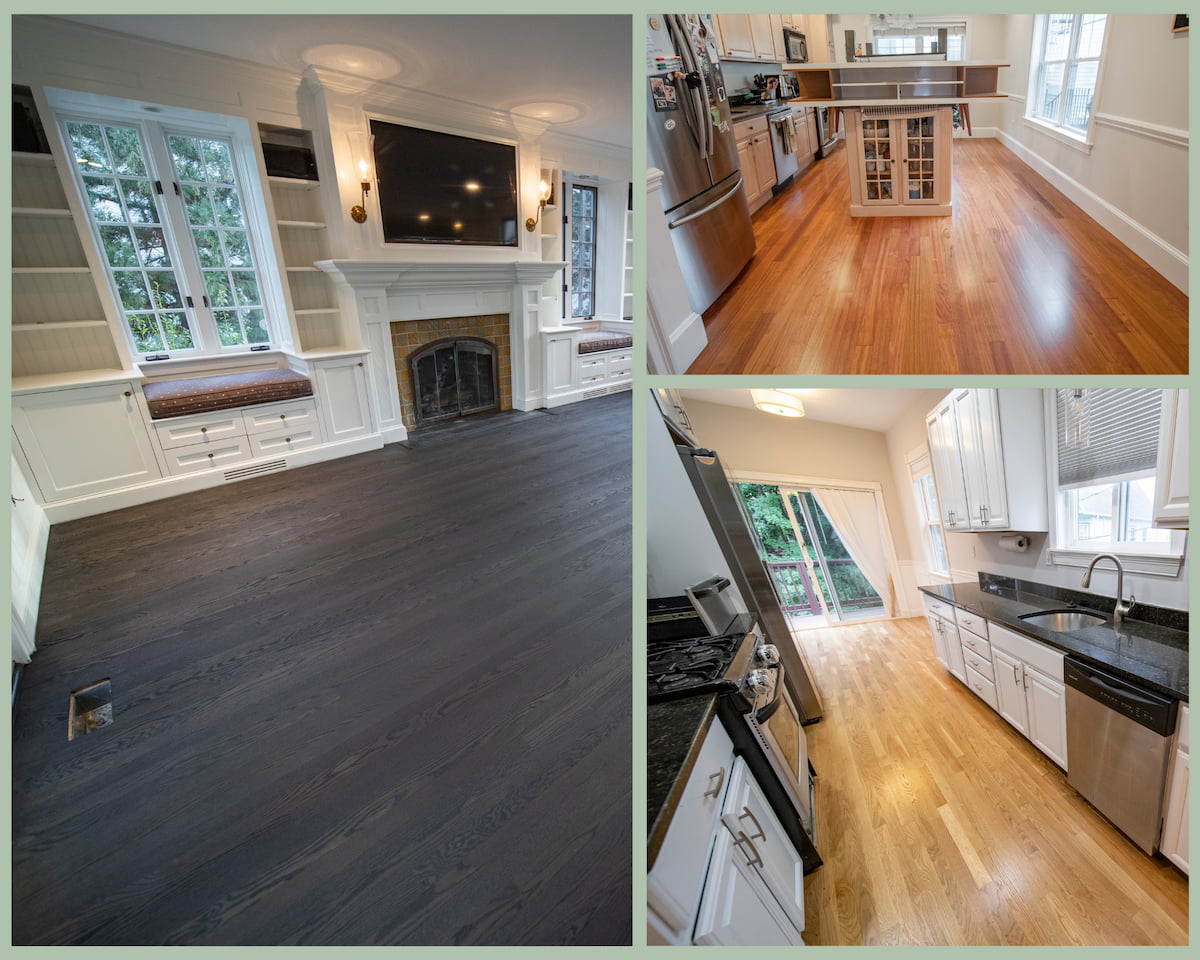
Salon interior with dark hardwood floors installed by Weles, with modern hairstyling stations and product shelves.

Hardwood Floor Installation

A hardwood floor is only as good as what's under it. We test moisture, prepare the subfloor, and install solid and engineered hardwood using the method that fits each room, in homes and businesses across Massachusetts, New Hampshire, and Maine.

Free Estimate

Moisture tested first: subfloor-to-wood difference held within 4% before boards go down.

Select & Better Select lumber, acclimated in your home for several days.

0% financing available for up to 12 months.

3 project managers reachable 7 days a week. Insured crews, in-house showroom.

Callback in 1 business day (617) 618-8395

Hardwood floor installation at a glance

Quick answer

Installation labor with Weles runs

$2–6per square foot

with the wood priced by species and grade in a written scope. The wood acclimates in your home for several days first; the install itself takes a few days for a typical room.

What we do

Installation of solid and engineered hardwood: moisture-first, with the method matched to each room.

What you get

A floor built to stay flat and quiet, with a written scope, fixed estimate, and final walkthrough.

Hardwood options we install

Find the right floor for your space, traffic, and budget with our assistance. Installation for homeowners, business owners, and property managers across Massachusetts, New Hampshire, and Maine.

Last updated: July 2026

Squeaks, gaps, cupping, and buckling almost always trace back to how a floor was installed, and they tend to appear months later, with the seasons, not on day one.

That's why we treat installation as the floor's foundation, not a cosmetic step. If you're wondering what bad installation looks like, we wrote up the signs of a bad hardwood floor installation.

Award Winning Services

What Our Clients Say About Our Hardwood Floor Services

5.0 Verified client reviews

The Craft

Moisture testing & subfloor prep: what happens before any boards go down

Most installation failures are moisture failures. Before we install, we check:

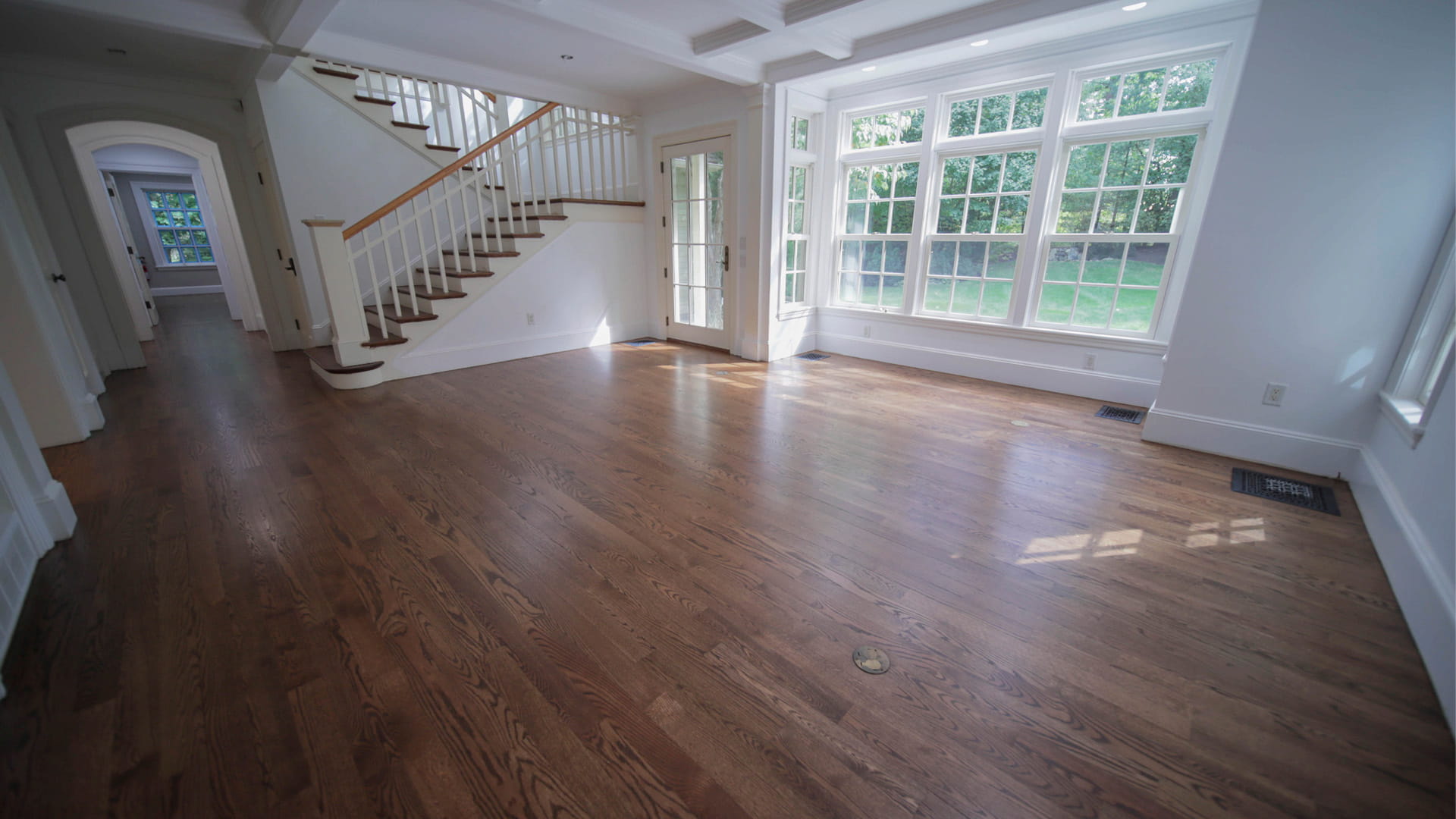
High-ceiling room with large windows and hardwood floors installed by Weles, natural light bringing out the warm wood tones.
  • Subfloor and flooring moisture, measured with moisture meters. The difference between the two must stay within 4% before we proceed.
  • Levelness of the subfloor and the state of the structure.
  • Underlayment and moisture barrier needs. See our guide to underlayment for hardwood floors.
  • Squeaks, weak points, and uneven areas, which get fixed before the boards arrive.

The wood itself matters too. We use Select & Better Select lumber grades and high-grade fasteners that resist oxidation and breaking. Boards acclimate in your home for several days, so they adjust to your indoor humidity before being fastened down. If moisture readings are too high, we tell you, and we fix the cause before proceeding.

Our Hardwood Floor Installation Process, Step by Step

Timelines assume a typical single-room to whole-floor project. Your written scope comes with dates for your home.

  1. Day 0 Site evaluation, measurements & written scope Fixed estimate

    We measure, walk the space with you, check the subfloor's condition, and test moisture. You get a fixed estimate after assessment: the price is set before work starts.

  2. Several days prior Delivery & acclimation Within 4%

    The wood arrives early and sits in your home for several days, adjusting to your indoor humidity before it's fastened down, not after. We install only when the subfloor-to-wood moisture difference is within 4%. Why this matters: how long to acclimate hardwood flooring.

  3. Install day 1 Subfloor preparation Barrier where needed

    Flatness, structure, squeaks, and transitions get corrected while they're still cheap to fix. Underlayment or a moisture barrier goes down where the readings call for it.

  4. Days 1–3 Installation: method matched to your floor Nail · glue · float

    Nail-down, glue-down, or floating, depending on the floor and subfloor (see the comparison below). Boards wider than 3¼ inches also get glue, because wider boards move differently.

  5. +2–5 days Finishing (site-finished floors only) 1–2 hr dry, water-based

    Prefinished flooring skips this step. We focus on precise fit, clean transitions, and detailing. Site-finished floors are sanded and coated here: water-based coats dry in 1–2 hours, oil-based in 12–15 hours per coat.

  6. Final day Final walkthrough & care guidance 30–50% humidity

    We inspect the floor with you (flatness, transitions, sound underfoot) and leave practical care guidance, including the 30–50% indoor humidity range that keeps wood floors stable through New England seasons.

Methods & Cost

Nail-Down, Glue-Down, or Floating?

The method isn't a preference. It follows from your subfloor and the floor you choose. Here's how we decide.

  • Solid hardwood

    Nail-down

    Over plywood or wood subfloors. The standard for most New England homes. Boards wider than 3¼ in also get glue for stability.

  • Engineered planks

    Glue-down

    Over approved concrete slabs. Common in condos and buildings on concrete decks. The slab gets moisture-tested before any adhesive goes down.

  • Click-lock systems

    Floating

    Over level subfloors, on underlayment. Fastest to install when conditions fit. The underlayment choice does real work here (see what underlayment for hardwood floors).

All three methods: best for, subfloor, good to know
Comparison of hardwood installation methods: nail-down, glue-down, and floating: what each is best for, the subfloor required, and practical notes.
Method Best for Subfloor Good to know
Nail-down Solid hardwood Plywood or wood subfloors The standard for most New England homes. Boards wider than 3¼ inches also get glue for stability.
Glue-down Engineered planks Approved concrete slabs Common in condos and buildings on concrete decks. The slab gets moisture-tested before any adhesive goes down.
Floating Click-lock systems Level subfloors, over underlayment Fastest to install when conditions fit. The underlayment choice does real work here (see what underlayment for hardwood floors).

Weighing nail against glue for your project? We compared them in detail: is it better to nail or glue hardwood flooring?

What does hardwood floor installation cost?

Labor is priced per square foot and the wood is priced separately, so you can see exactly where the money goes.

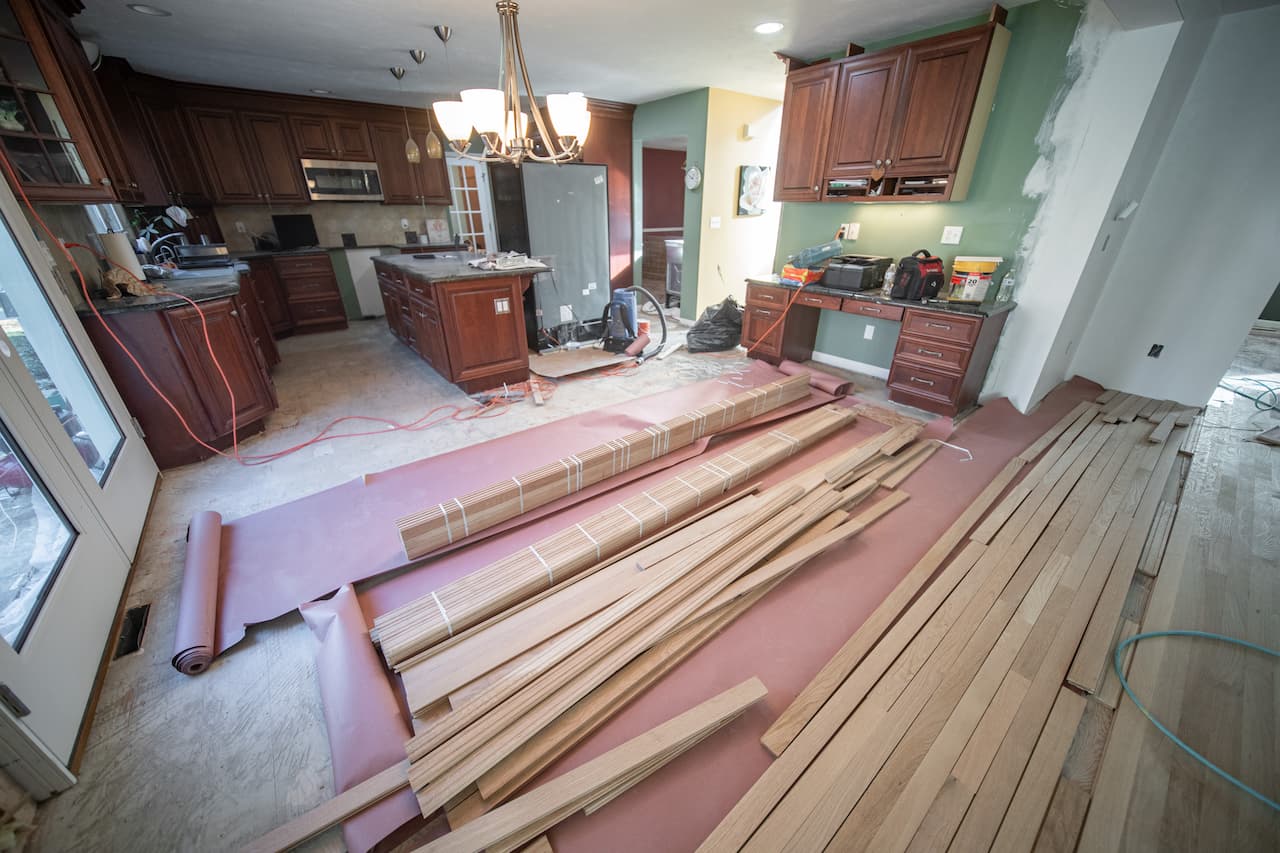
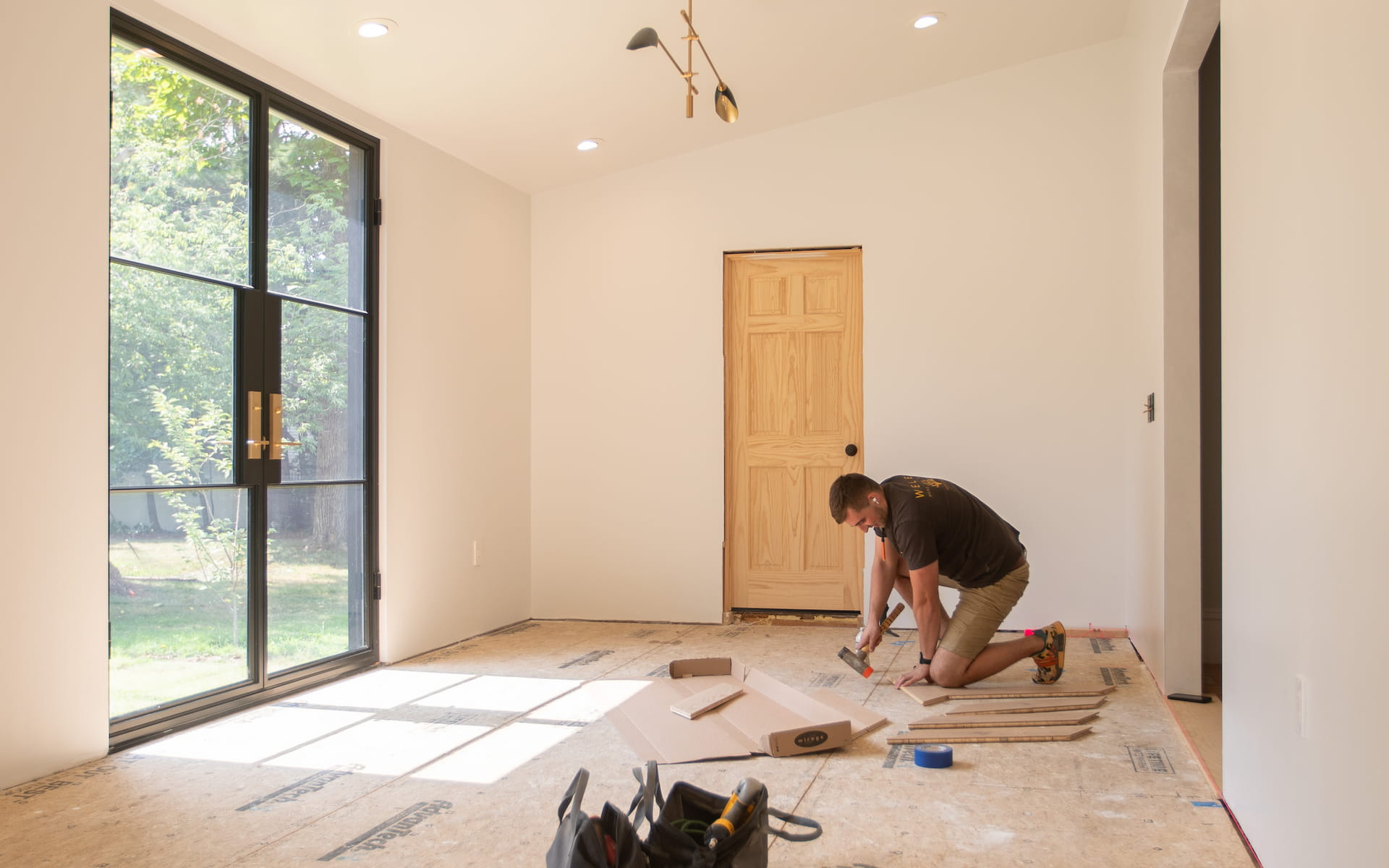
A Weles installation in progress: underlayment rolled across a kitchen floor with unfinished oak boards staged for laying.
$2–6 per square foot labor with Weles · wood priced separately

What moves your number

  • Subfloor correction
  • Installation method
  • Board width and species
  • Stairs and transitions

The wood itself is priced by species, grade, and board width in the written scope.

118% of cost recovered at resale for new wood flooring (NAR/NARI, 2022)
$2,500–$6,740 typical project all-in, materials included (HomeAdvisor, 2026)

Fixed estimate after assessment. We measure and test the subfloor first, define the scope in writing, then hold the price.

See the installation cost breakdown for Boston-area homes.

Choosing Your Floor

Solid vs. Engineered Hardwood

Both are real wood. The difference is construction, and it decides where each floor can go and how it lives with New England humidity.

  • Nail-down

    Solid hardwood

    One solid piece of wood, usually ¾ in thick. It goes over plywood or wood subfloors, above grade, and can be sanded and refinished multiple times. Expands and contracts more with humidity, so acclimation and the 4% rule matter most here.

  • Glue or float

    Engineered hardwood

    A real-wood wear layer over a layered core. It goes over approved concrete and into spaces where solid wood would move too much; the layered core resists cupping and gapping. Refinishing depends on the wear layer: 2 mm or more allows careful sanding.

Side by side: construction, placement, refinishing, movement
Comparison of solid and engineered hardwood: construction, where each can be installed, refinishing potential, installation methods, and seasonal movement.
Solid hardwood Engineered hardwood
Construction One solid piece of wood, usually ¾ inch thick A real-wood wear layer over a layered core
Where it can go Over plywood or wood subfloors, above grade Over approved concrete (glue-down) and in spaces where solid wood would move too much
Refinishing potential Can be sanded and refinished multiple times Depends on the wear layer: 2 mm or more allows careful sanding
Install methods Nail-down; glue assist for boards over 3¼ inches Glue-down or floating, depending on the product
Seasonal movement Expands and contracts more with humidity; acclimation and the 4% rule matter most here The layered core resists cupping and gapping

Full comparison with photos in engineered vs. solid hardwood, or see both in person at our Chestnut Hill showroom.

Hardwood Floors Room

Why hardwood is worth installing

  • Lasts for decades, and solid wood can be refinished several times along the way.
  • Easier on allergies than carpet: dust and dander don't embed in it.
  • Species, width, stain, and finish options to fit the room, the light, and the traffic.
  • Holds value: new wood floors recover about 118% of their cost at resale (NAR/NARI 2022).
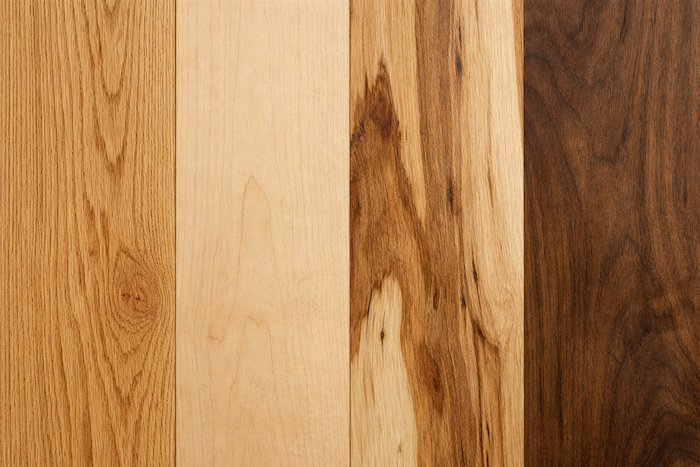
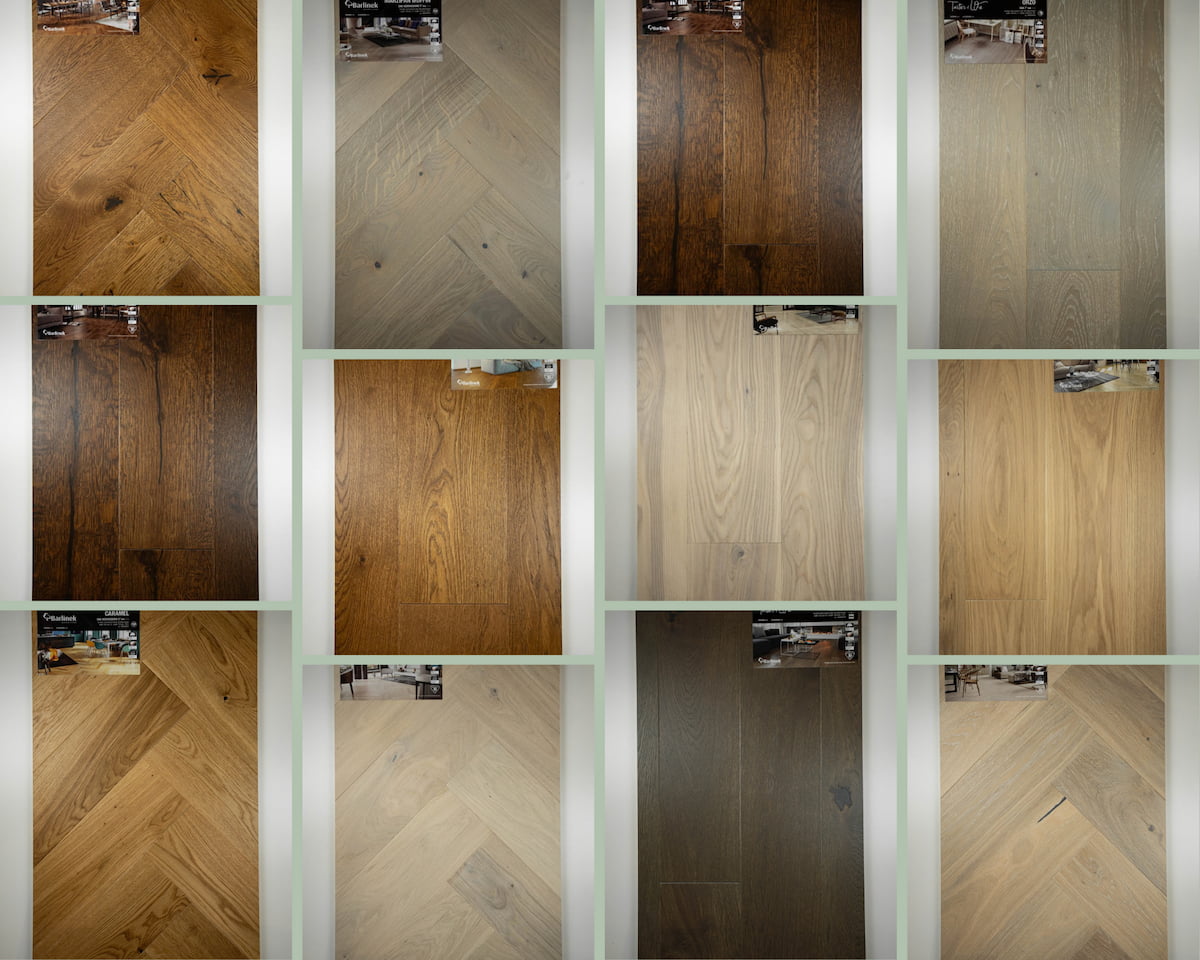
From left to right: oak, maple, hickory, and walnut hardwood planks.

Popular hardwood species

  • Oak (red/white): durable, open grain, takes stain evenly. The New England standard.
  • Maple: smooth, subtle grain, naturally lighter tone.
  • Hickory: the hardest of the common species, with bold character.
  • Walnut: deeper, richer brown for lower-traffic rooms.

Explore Our Hardwood Flooring Projects

Portfolio

Installations and refinishes we've completed across Massachusetts, New Hampshire, and Maine, photographed in clients' real rooms.

Showroom

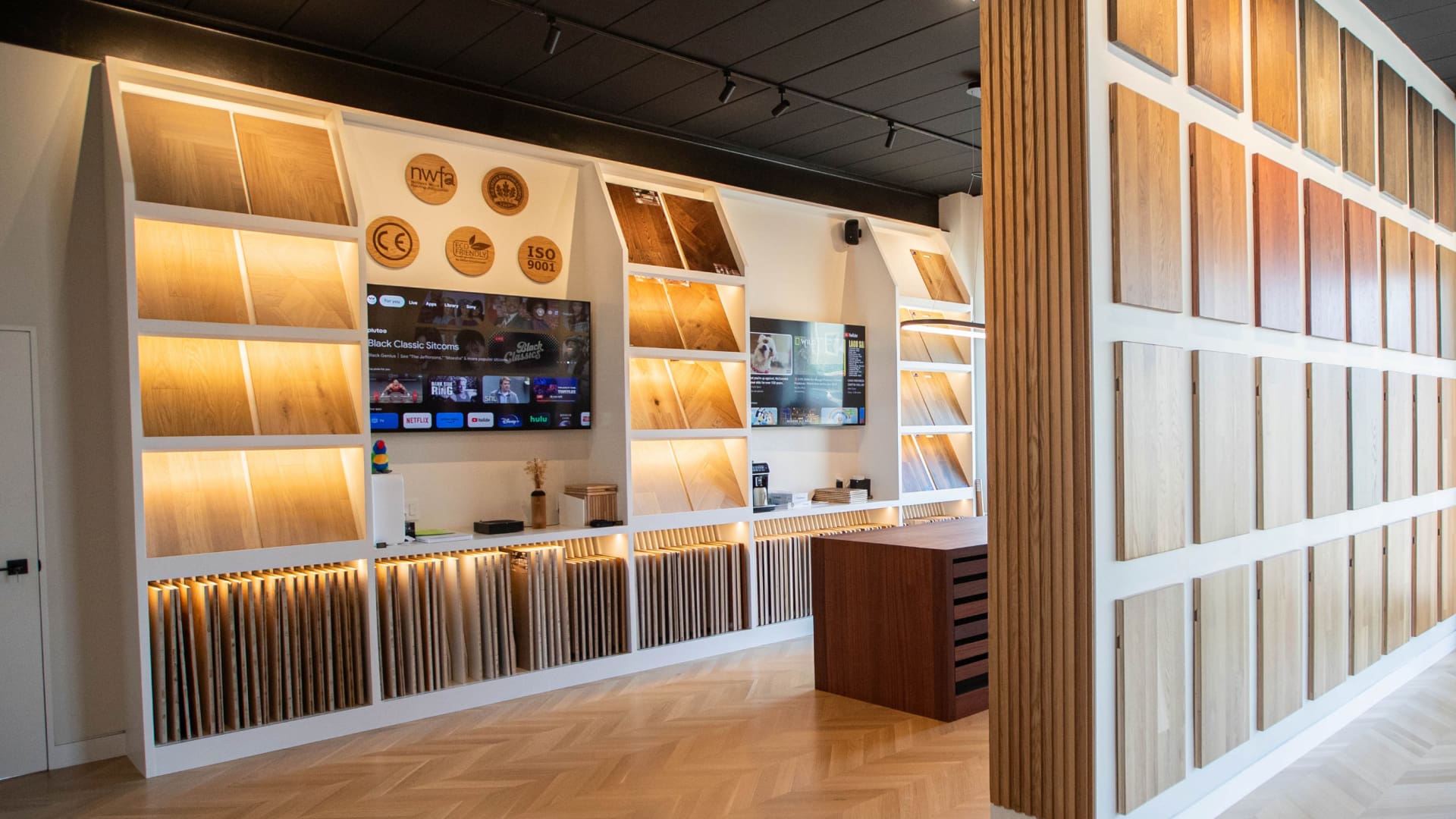
See and walk on wood species before you commit. Explore the showroom online or visit us at 800 Boylston St, Chestnut Hill, MA 02467, 30 minutes from downtown Boston.

Products

Dozens of plank samples (species, widths, and stains) to find the one that fits your rooms.

Get your estimate

Crew & Proof

Hardwood Flooring for Property Managers & Realtors

Turnovers and closing dates don't wait for a contractor's schedule. Ours is built for that.

Units in parallel

7 crews and 7 fully equipped vans mean we can run several units at once, or slot a single unit between tenants without dragging out the vacancy.

Predictable per-unit pricing

A written scope and fixed estimate per unit keeps pricing consistent across a portfolio. 3 project managers are reachable 7 days a week, and 500+ references are available on request.

Options that cut downtime

Prefinished and engineered floors skip on-site finishing and its cure time. For pre-sale refreshes, refinishing existing floors often beats replacement on both cost and timeline.

Who Shows Up, and How Your Project Is Run

The crew

Weles runs 7 crews with 7 fully equipped vans across Massachusetts, New Hampshire, and Maine. Hardwood floors are our daily work: installation, refinishing, and repair, nothing else.

  • A scheduling question never stalls a turnover.
  • Certified by Lagler, Loba, Wakol, Bona, and American Sanders.
  • General Liability and Workers’ Compensation coverage on every project.
  • A physical showroom at 800 Boylston St, Chestnut Hill for samples and planning.

What we put in writing

The paperwork is part of the service. Before the first board goes down, you know what’s happening, when, and for how much.

  • A fixed estimate after assessment: the price is set before work begins.
  • A written scope covering materials, method, prep work, and schedule.
  • Daily cleanup during the project.
  • A final walkthrough before we call the job done.

Questions about follow-up support? Ask your project manager during the assessment. That conversation is part of the written scope.

Why Choose Weles Wood Floor Services?

Refinishing and installation done with dustless sanding by default, pro-grade equipment, and moisture-controlled standards, managed by dedicated project managers.

90-95% dust control 7 crews 4% moisture rule
Request estimate
Weles Wood Floors team in front of their branded vans

Reimagine Your Space with
Image of hardwood planks
5 star rated
Weles Wood Floor Services

Uncover the Beauty of Hardwood. From Installation to Refinishing, We Ensure Perfection in Every Project.

Free Estimate

F.A.Q

Hardwood Floor Installation

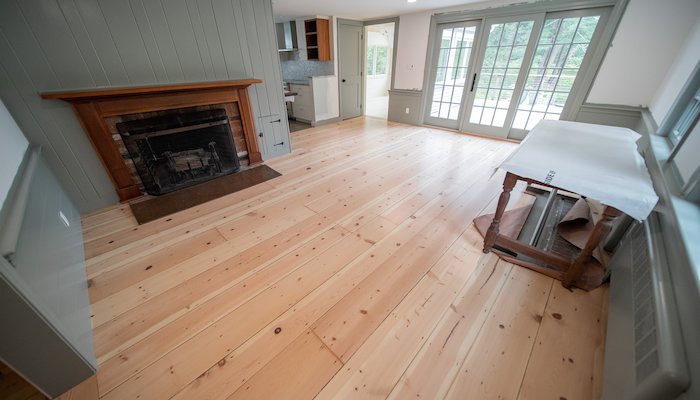
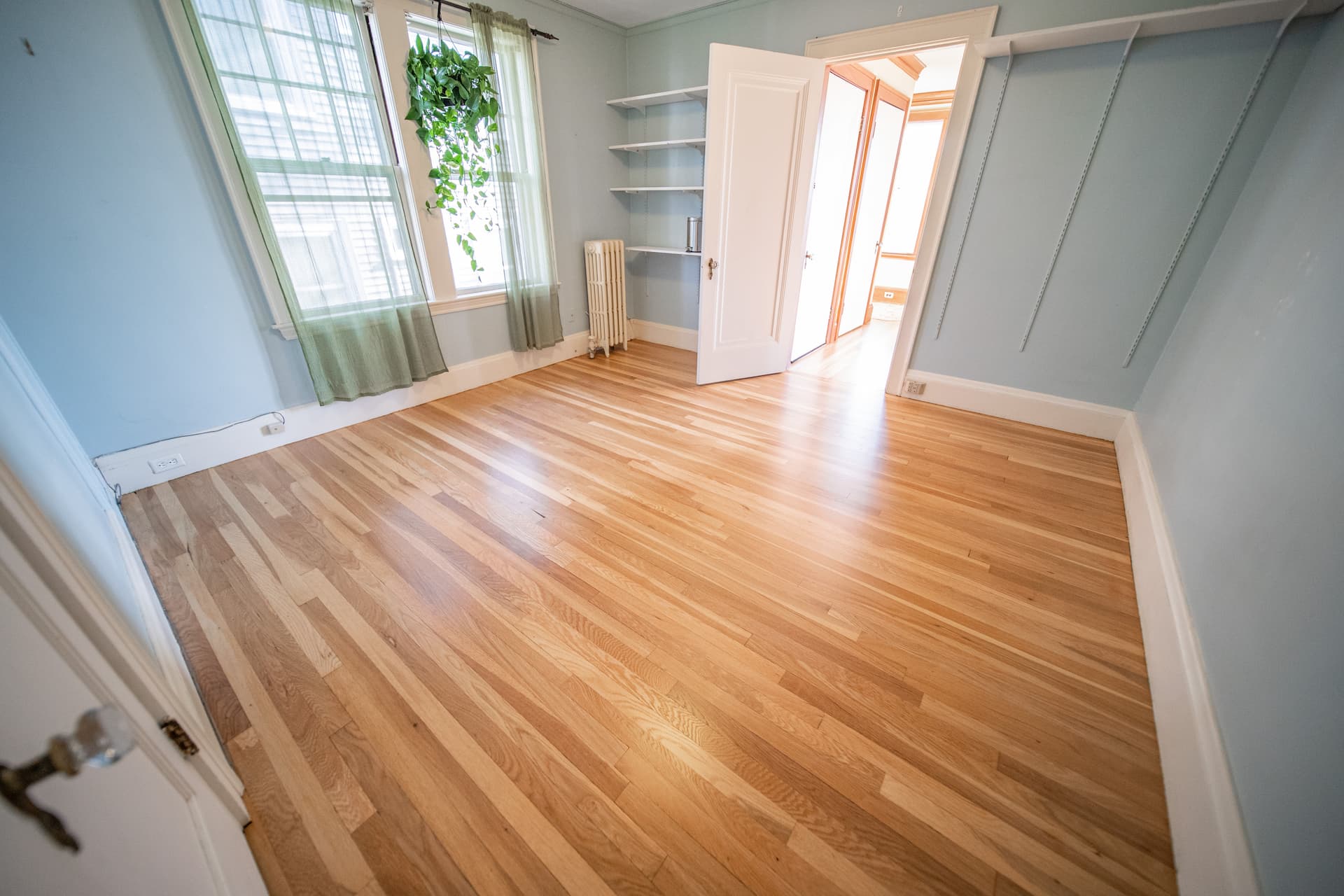
Room with newly installed natural hardwood flooring by Weles, with a blue wall, green curtains, and sunlight through the windows.

Unfinished (site-finished) flooring is raw wood that gets sanded and finished in your home. It gives the most control over color and sheen, and the finish seals the seams between boards. Prefinished flooring arrives already sanded and coated at the factory, so the room is walkable as soon as it's installed. We install both; the right choice depends on your timeline and the look you want.

Installation labor with Weles runs $2–6 per square foot, with the wood priced by species and grade in the written scope. HomeAdvisor's 2026 figures put a typical project at $2,500–$6,740 all-in. See Boston-area details.

Plan on one to two weeks end to end: several days of acclimation after delivery, then a few days of installation for a typical area. Site-finished floors add sanding and coating days; prefinished floors are walkable right after install.

Yes: usually engineered hardwood, glued down over an approved slab, or a floating floor over underlayment. The slab gets moisture-tested first, and a moisture barrier goes down where the readings call for it. Solid ¾-inch hardwood generally isn't nailed to concrete.

It follows from the subfloor and the product: solid wood is nailed to plywood; engineered planks are glued to approved concrete; boards wider than 3¼ inches get glue as well, because wider boards move differently. The full comparison: is it better to nail or glue hardwood flooring?

Almost all of these are moisture and prep problems, so we prevent them before installation: moisture readings within the 4% rule, several days of acclimation, subfloor flattening and squeak fixes, moisture barriers where needed, and high-grade fasteners. What failure looks like: signs of a bad hardwood floor installation.

Wood expands and contracts with moisture. Acclimating the boards for several days lets them adjust to your home's humidity before they're fastened down. Installing too early is a common cause of gaps and cupping later. Details: how long to acclimate hardwood flooring.

Contact Us

Ready to plan your installation? Talk to Weles today.

How to Contact us?

Reach us by phone, send us an email, or simply fill out the form and we'll get back to you as soon as possible.

Showroom
800 Boylston St, Chestnut Hill
Free Estimate

Contact Weles