

Hardwood Floor Water Damage Repair
You don't have to get a new floor because of a leak. Weles dries, repairs, and refinishes water-damaged hardwood floors across Greater Boston and Eastern Massachusetts. We replace only the boards that are actually gone.
Free Estimate


Moisture tests before and after: repairs don't begin until the boards and subfloor read dry.
Insurance-ready paperwork: photos with dates, moisture logs, and an itemized written scope.
New boards stained and sheen-matched to what's already on your floor.
3 project managers you can reach 7 days a week. 7 insured crews across Eastern Massachusetts.
Content updated August 2026
Hardwood floor water damage repair at a glance
Sand & refinish after dry-down runs
$4-9per square foot
Board replacement is priced per board in the written scope. Industry-wide, hardwood water damage repairs run $10-80 per square foot depending on severity (Modernize, 2026).
Drying tracked with moisture meters, replacement of the boards that can't be saved, then sanding and stain blending so the repair doesn't look like a patch.
After the assessment, one fixed estimate plus paperwork your insurance adjuster can use. Once the finish cures, the repair should be hard to find.
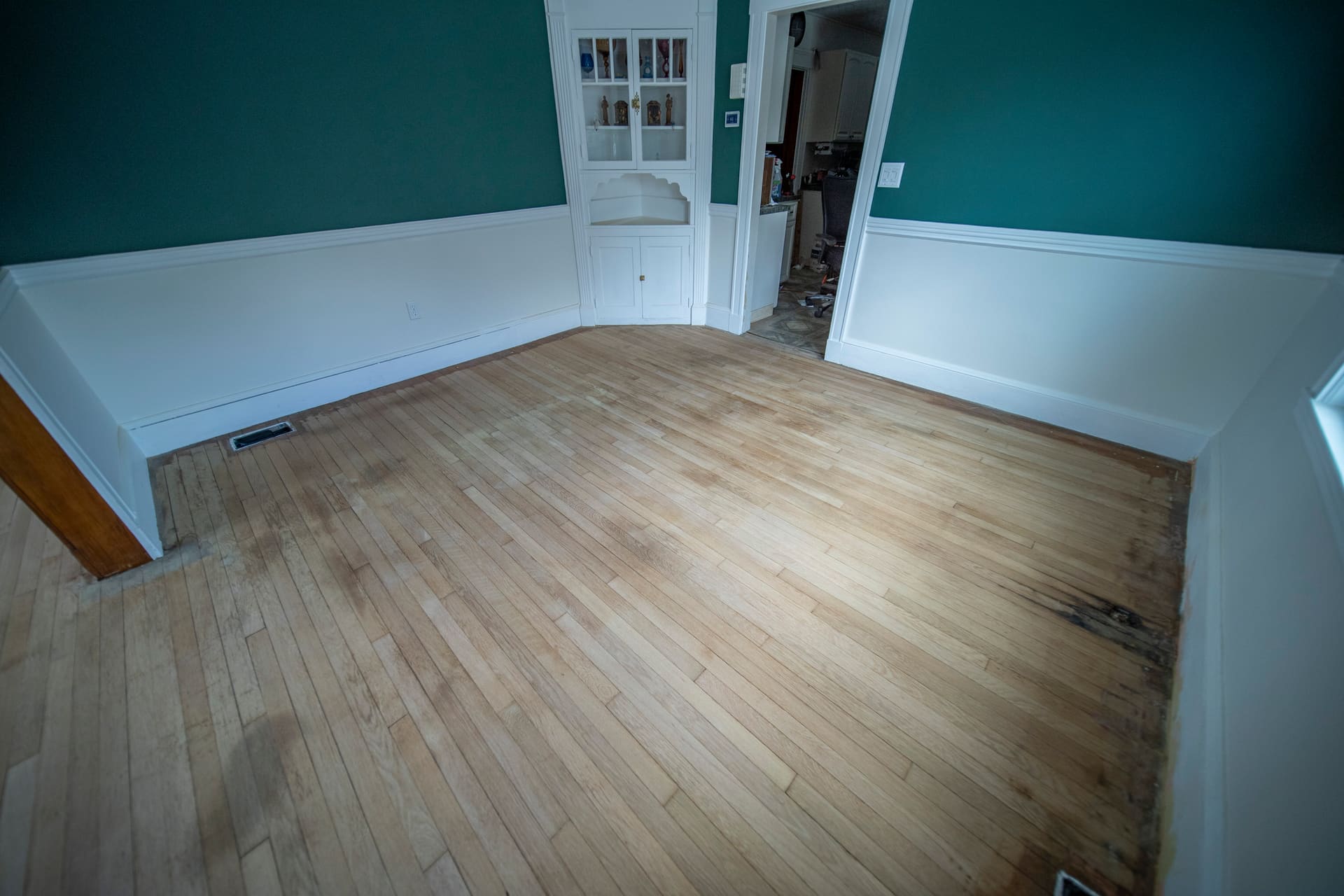
Cupping, buckling, dark stains, and lifted boards are how hardwood shows you where the water went. The pattern of the damage decides whether the fix is drying, sanding, or board replacement.
If the spill just happened, our wood floor water damage guide has the first-hour steps: stop the source, get the water up, keep the air moving. Then call (617) 618-8395. 3 project managers answer 7 days a week, and the assessment tells you exactly what can be saved. Crews work out of Chestnut Hill and cover hardwood floors across Boston and the towns nearby.
Award Winning Services








What Our Clients Say About Our Hardwood Floor Services
The Damage
Cupping, Buckling, or Black Stains? What Each One Means
The shape of the damage shows how deep the water went and how much of the floor it actually took.
-
Often recoverable
Cupping
The edges of the boards sit higher than their middles, which means water is coming in from below or from one side. After the readings go back to normal, many cupped floors flatten on their own over a few weeks. We sand only after that: sanding a still-cupped floor locks the shape in as crowning later.
-
Board replacement
Buckling
Wet boards swell until they lift off the subfloor, usually after standing water. Boards that buckled or delaminated do not go back down. We take up the lifted area, check the subfloor, and fit new boards that match the old ones.
-
Spot repair
Stains & clouding
A white haze means moisture is trapped in the finish, and it often buffs or screens out. Gray or black marks mean water got into the wood itself, which takes spot sanding, and sometimes a board swap where the fibers have broken down.
Not sure which one you're looking at? Our guide goes into more depth on the signs of water damage on wood floors.
Water Under the Hardwood Floor Is the Bigger Risk
Towels take care of the surface. What reached the subfloor decides between a light sanding and a rebuild.
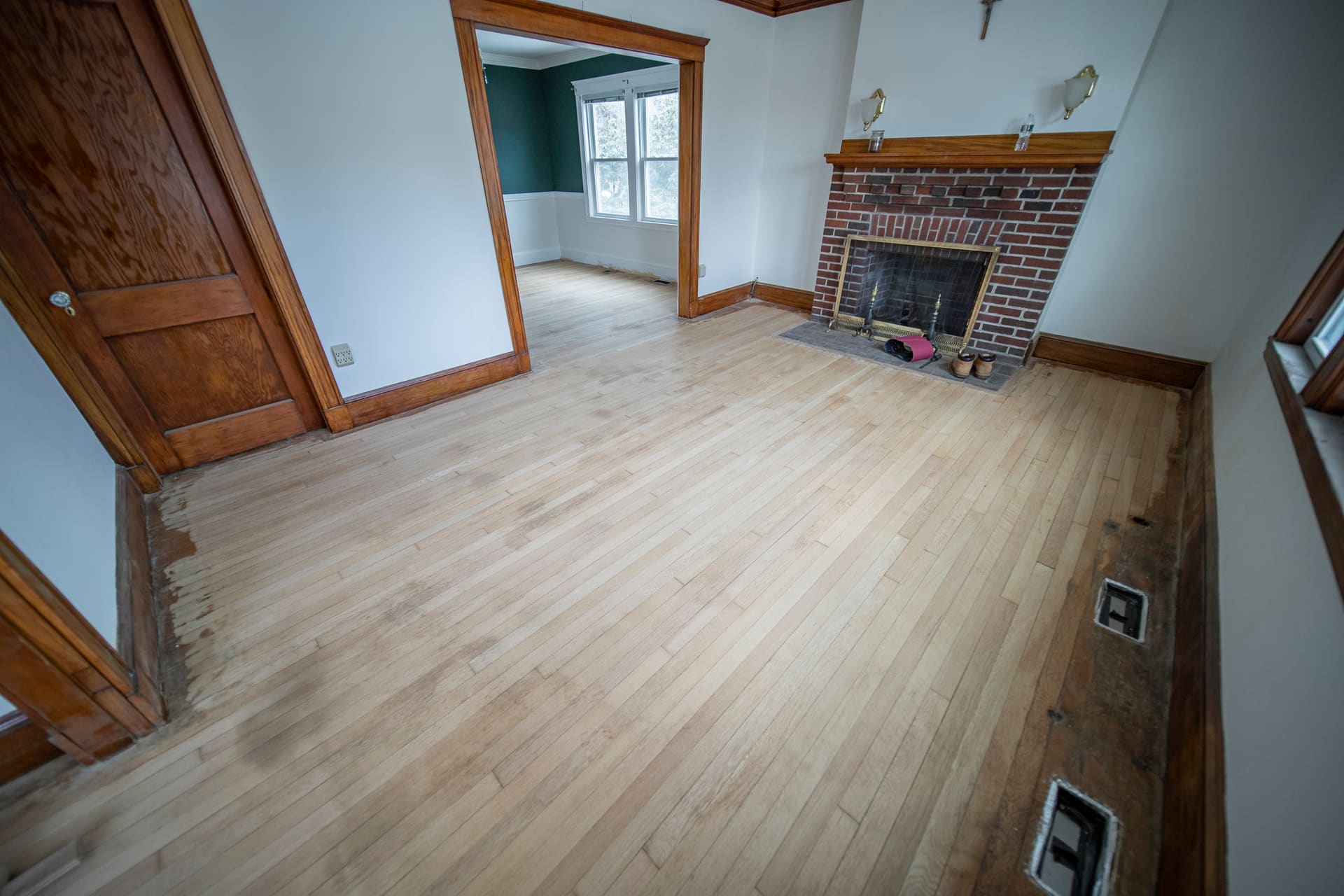
- Water travels along the subfloor far past the wet spot you can see, so the damage is usually wider than the stain.
- Trapped moisture keeps feeding the boards from below. That is what turns one wet weekend into cupping across the whole room.
- A damp subfloor or underlayment that wasn't checked is a common reason repaired floors fail again months later.
That is why we map the area with pin and pinless moisture meters before giving a quote, including the rooms next to the one that got wet. When readings under the floor stay high, drying comes first, and we don't sand or fit new boards until the numbers drop back to the normal range for your home.
Repair & Cost
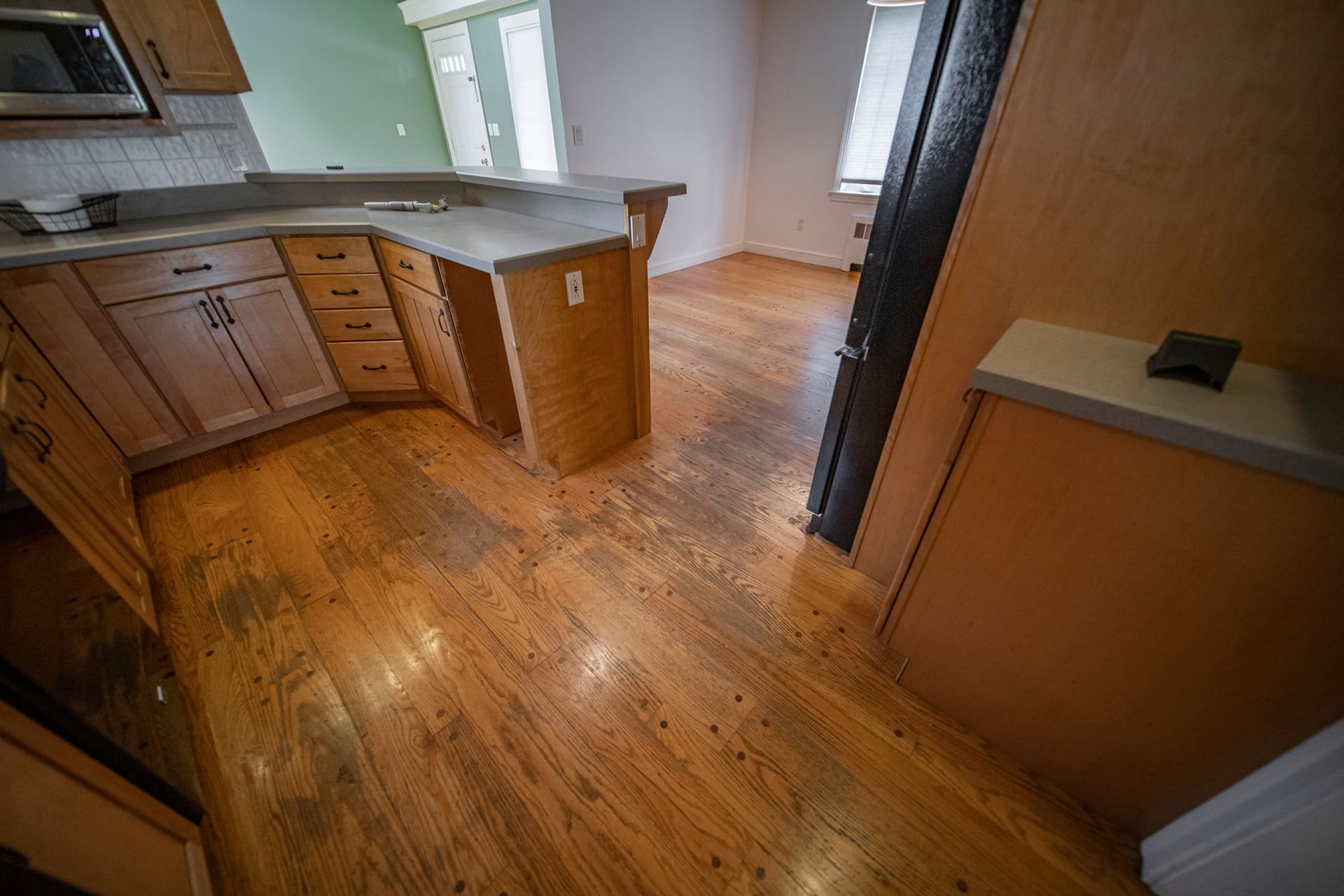
How We Repair Water-Damaged Wood Floors, Step by Step
If there's an active leak or standing water, a plumber stops the source, and in the worst cases a mitigation company handles extraction. We take it from there.
-
Day 0 Assessment & moisture mapping Free estimate
We photograph the damage, meter the boards and subfloor at set points, and map how far the water went. After the assessment you get a fixed estimate and a copy of everything we wrote down, helpful whether you file a claim or not.
-
Days to weeks Controlled drying, verified with meters Re-metered
Dehumidifiers and moving air bring the boards and subfloor back toward their normal range. A small spill dries in days, but a soaked floor can take weeks. We don't guess; we re-check the readings, because wood that looks dry on top can still be wet underneath.
-
Once dry Board & subfloor replacement where drying isn't enough Matched boards
Buckled, delaminated, or rotten boards are taken out, and the subfloor gets repaired where it failed. New boards come in the right species, width, and grade, woven into the existing field instead of dropped in as a visible rectangle.
-
1-3 days Sanding, stain blending & refinishing Dust-controlled
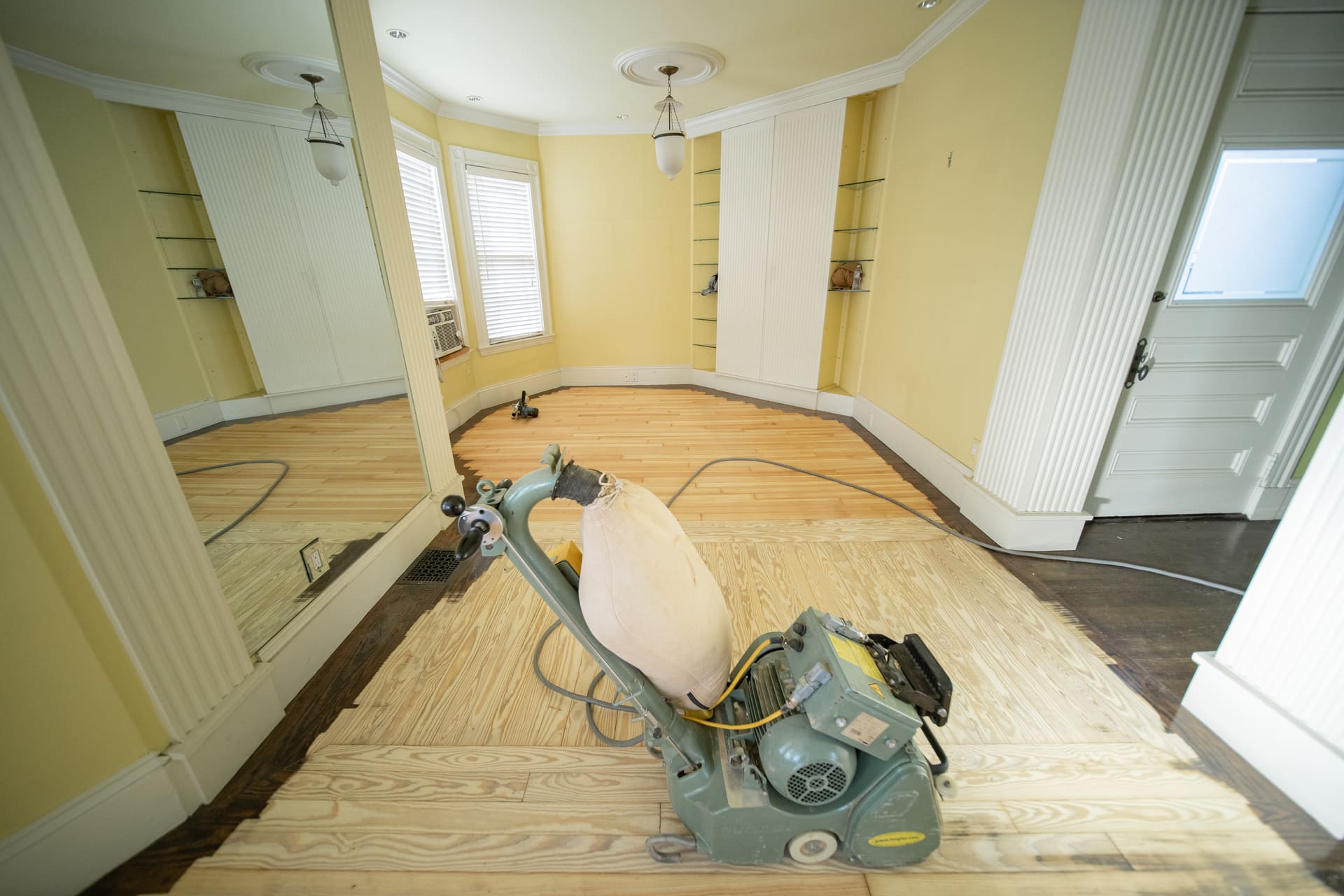
We sand either the repaired area or the whole room, blend the stain to the boards around it, and rebuild the finish. Our dustless sanding system captures most of the dust at the source, so the rest of the house stays livable while the work is being done.
-
Final day Walkthrough & prevention plan 30-50% RH
We check the floor with you, confirm the readings one last time, and leave a short prevention plan: the 30-50% indoor humidity range, plus the spots in your home worth checking for leaks twice a year.
Repair It, Replace Part of It, or Get a New Floor?
We price the honest choice, not the biggest one. Most water-damaged hardwood floors don't need to be replaced.
Dry, sand & refinish
For minor water damage: boards that cupped or stained but stayed down and dried flat. The floor gets sanded and refinished as one surface. It's the most common outcome and the least expensive. See hardwood floor refinishing.
Replace boards, blend, refinish
For buckled or rotted sections inside a floor that is otherwise sound. The damaged boards and any failed subfloor come out, the patch is blended, and the area is refinished. Part of our broader repair & restoration work.
Full replacement
Only when the subfloor rotted, most of the room buckled, or an engineered wear layer is too thin to sand again. If it comes to that, we say so plainly and quote a new installation instead.
What does hardwood floor water damage repair cost?
Water damage pricing is scope pricing: the meter readings and the board count set the number, and the number stays put.
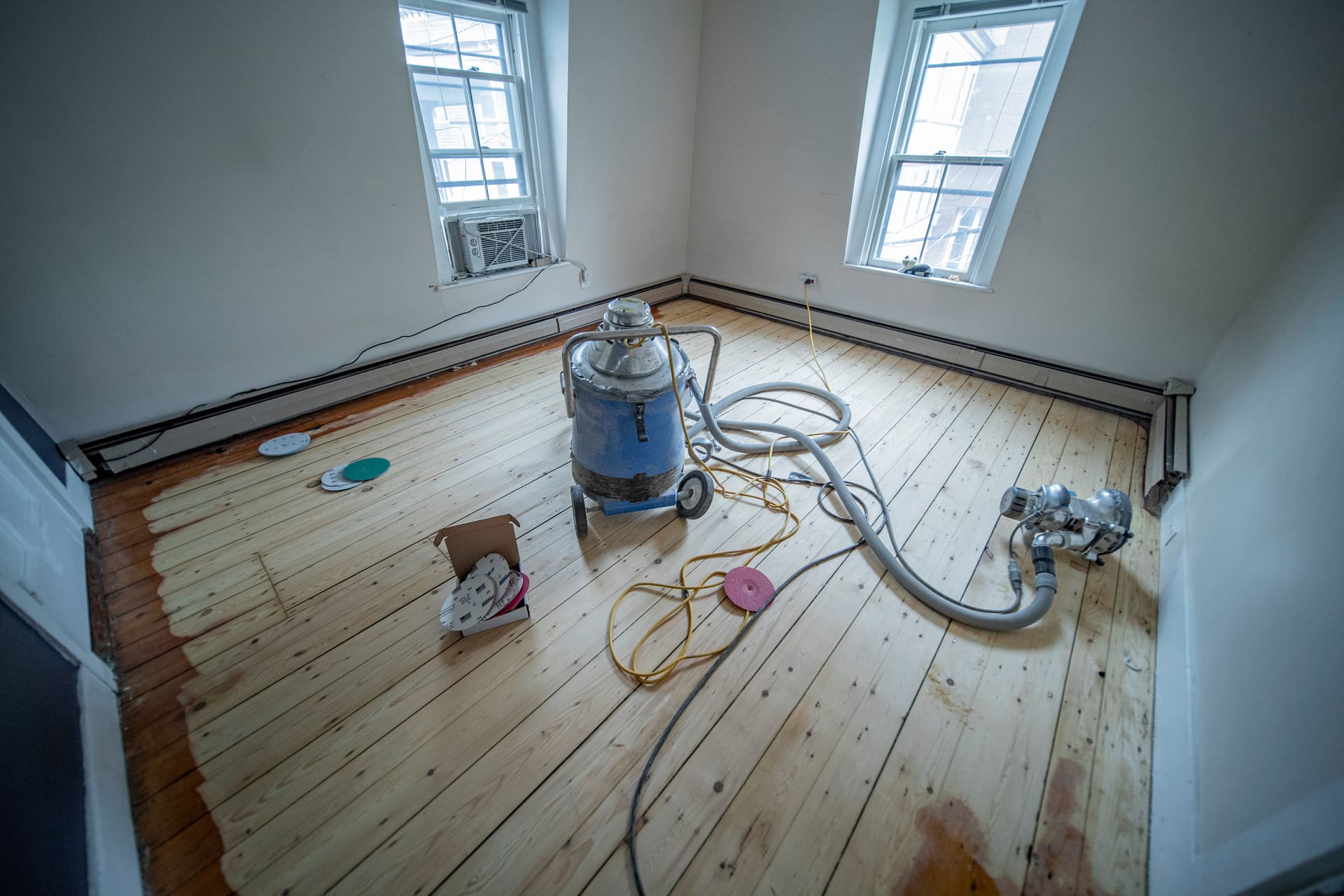
What moves your number
- How many boards need replacing
- Subfloor and underlayment repairs
- Drying time and monitoring visits
- Stain blending, stairs, and transitions
Replacement wood is priced by species, grade, and board width in the written scope.
Fixed estimate after assessment. We meter the floor, define the scope in writing, then hold the price.
Trying to decide between repair and replacement? Our water damage guide walks through when each one wins.
Solid vs. Engineered Hardwood After Water
What can be saved depends on how the board is built, so the assessment starts with what's on your floor.
-
More forgiving
Solid hardwood
One piece of wood, usually ¾ in thick. Wet, it swells and cups; once dry, it can be sanded hard and refinished, and single boards can be cut out and rewoven. Even badly hit solid floors often come back.
-
Replace when soaked
Engineered hardwood
A real-wood wear layer over a layered core. It handles surface spills better than solid wood, but soaking is different: once the core swells or the layers separate, those boards get replaced, not sanded. Wear layers of 2 mm or more allow one careful sanding.
Laminate is its own case: a swollen laminate plank never gets better and has to be replaced. If you don't know what's on your floor, lift a floor vent and look at the board edge. One solid layer means solid hardwood; visible layers mean engineered or laminate.
Insurance & Prevention
Helping You With Your Insurance Claim
We specialize in floors, not claims handling. What we can do is hand you paperwork an adjuster takes seriously.
What we document
Photos with dates for every affected area, moisture readings at marked points, a sketch of how far the water went, and an itemized written scope your adjuster can read line by line.
What policies usually cover
Sudden, accidental events: a burst pipe, a failed appliance line, an overflow. Slow leaks and seepage are usually excluded, and outside flooding needs its own flood coverage (Nationwide). Your policy has the last word.
How the estimate fits in
One fixed, itemized estimate: drying, board replacement, sanding, finishing, each on its own line. Whether you pay or an insurer does, we quote the same scope, so the number stands up to scrutiny.
Stopping the Next One
Most of the water damage we see in New England traces back to a short list: supply lines for dishwashers and ice makers, radiator valves, water heaters, washing machine hoses, and ice dams pushing meltwater in at the walls. Checking those twice a year costs nothing and catches most failures while they are still a towel job.
In the long run, humidity is the enemy. Keep indoor relative humidity between 30 and 50 percent all year: a humidifier in the New England winter, a dehumidifier in the summer. In that range boards don't gap in January or cup in July, and it's the same target we leave you with after every repair.
Crew & Proof
Before & After: Water-Damaged Boards, Sanded and Refinished
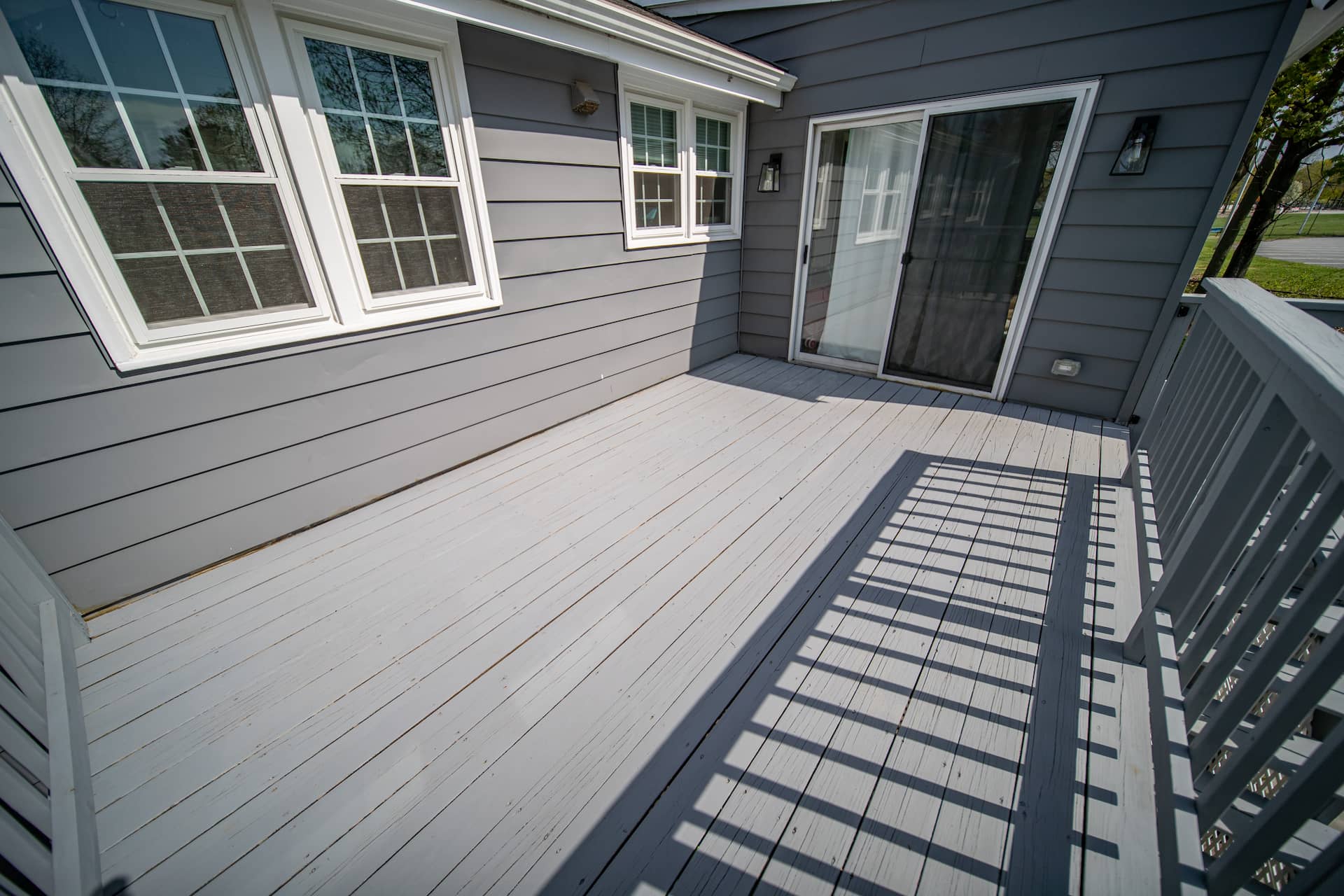
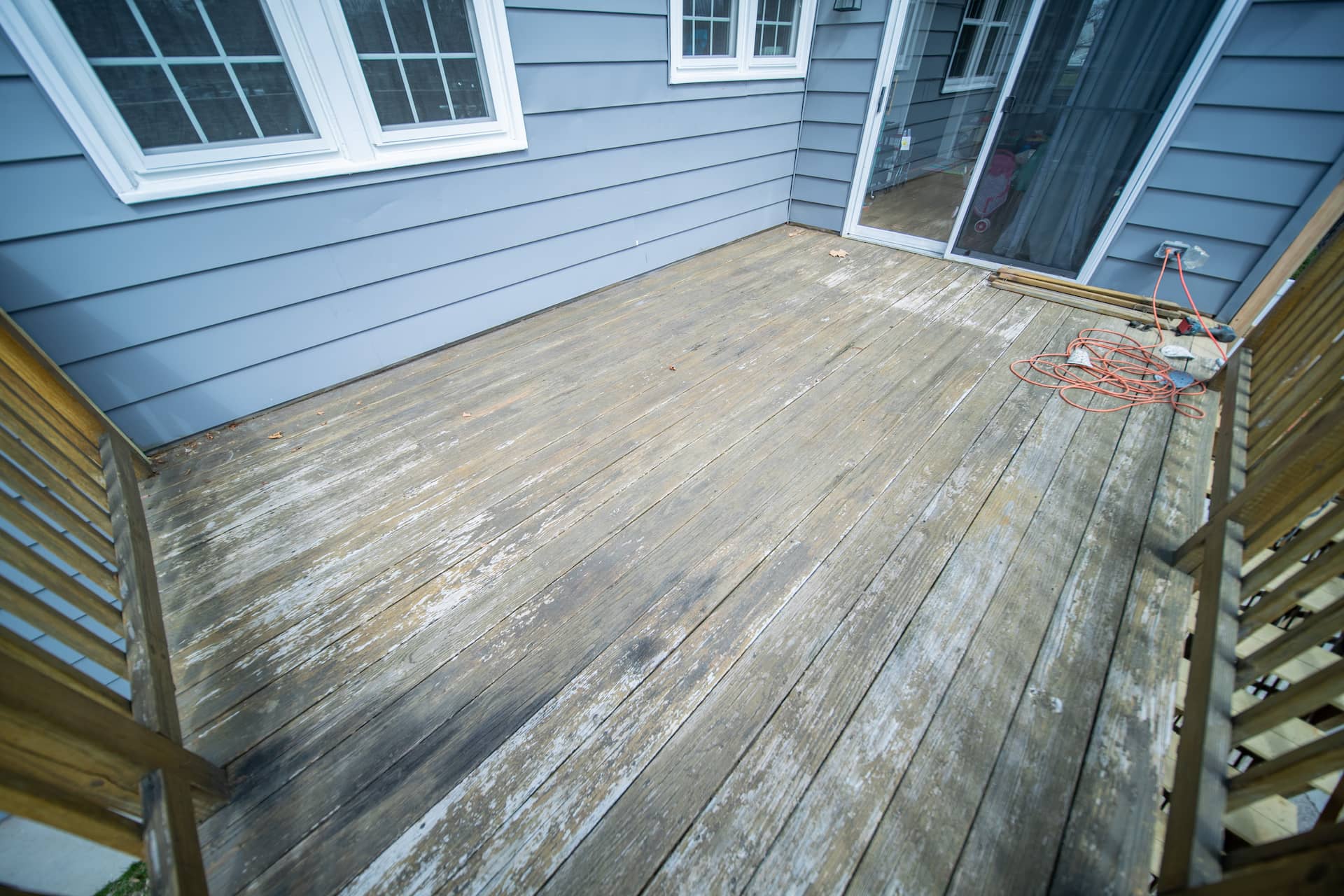
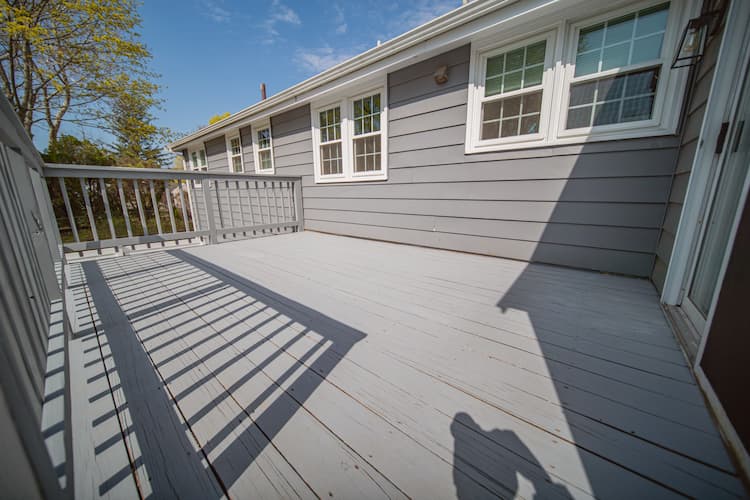
Drag the slider. The before shows gray, water-stained boards with the finish coming off. The after is the same deck, sanded and refinished.
Who Comes to Fix It, and How the Job Is Run
The crew
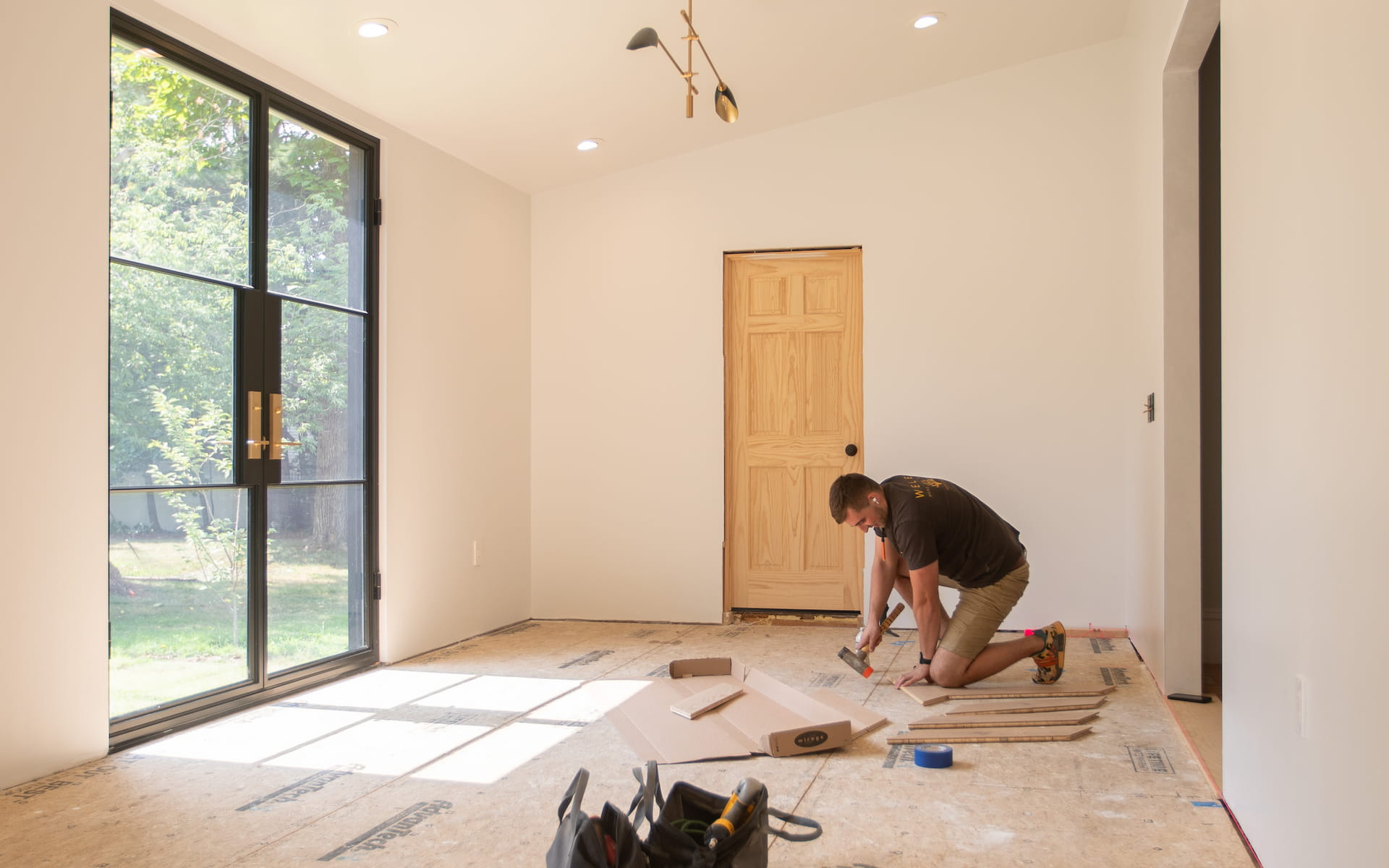
Hardwood floors are our daily work: installation, refinishing, and repair, nothing else. Water damage goes to crews that do board weaving and stain blending every week, not just occasionally.
- Certified by Lagler, Loba, Wakol, Bona, and American Sanders.
- General Liability and Workers’ Compensation coverage on every project.
- Moisture meters ride on every van, so readings happen on the first visit, not a follow-up.
- A real showroom at 800 Boylston St, Chestnut Hill, where replacement boards and finishes get matched.
What we put in writing
Water damage invites scope creep. The paperwork is how we keep your project from becoming a change-order mill.
- A fixed estimate after assessment: the price is set before the job starts.
- A written scope covering drying, board replacement, sanding, and finish.
- Copies of the photos and moisture logs for your records or your claim.
- One last walkthrough before we call the job done.
Questions about follow-up support? Ask your project manager during the assessment. That conversation is part of the written scope.
Why Choose Weles Floors?
Every job uses dustless sanding, with HEPA extraction that keeps roughly 90 to 95% of the dust out of the rest of the house. We check moisture before fastening a board and hold the subfloor-to-wood difference inside 4%. Seven crews run the work, and a project manager answers seven days a week.
Request estimateby default HEPA-filter dust control with contained work zones for up to ~90-95% dust reduction.
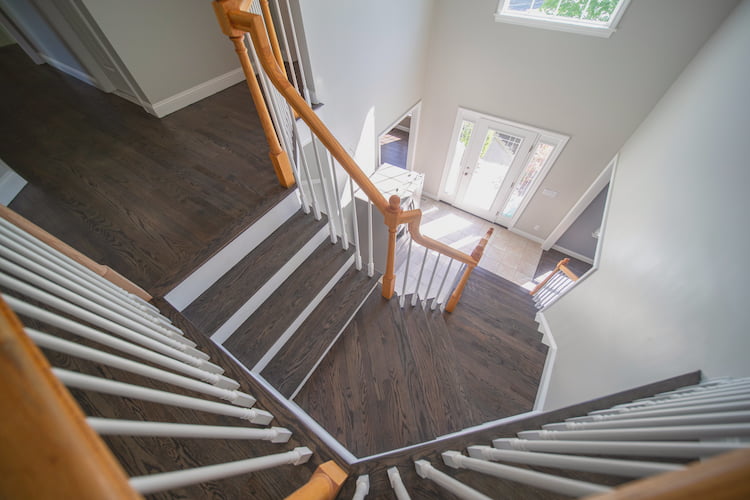
sanding options From standard sanding to high-end finishing with professional-grade systems (including Lagler Trio) for a cleaner, smoother surface.
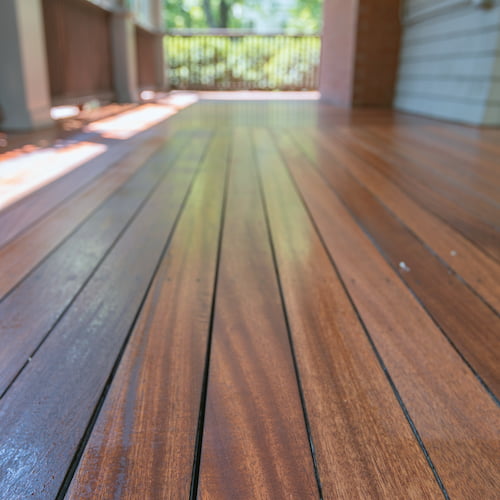
to all standards We acclimate the wood, measure moisture, and keep the subfloor-to-wood difference within 4% before fastening.
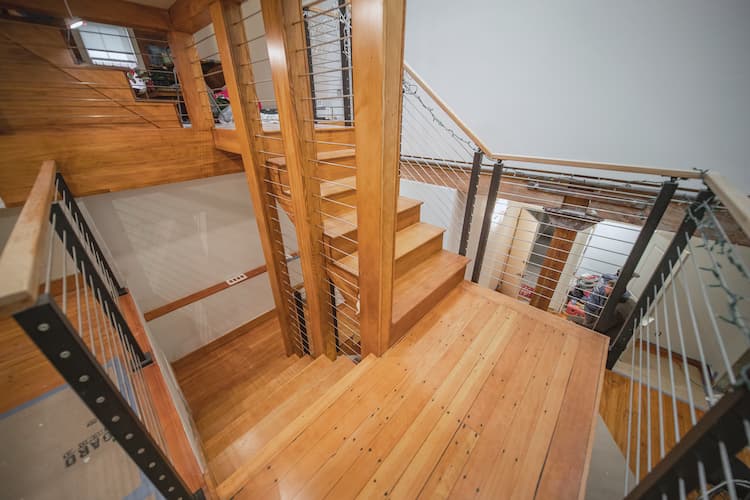
projects 7 crews, project managers available 7 days/week, showroom for samples, plus General Liability and Workers’ Comp coverage.

Reimagine Your Space with
 5 star rated
Weles Floors
Uncover the Beauty of Hardwood. From Installation to Refinishing, We Ensure Perfection in Every Project.
Free EstimateF.A.Q
Hardwood Floor Water Damage Repair
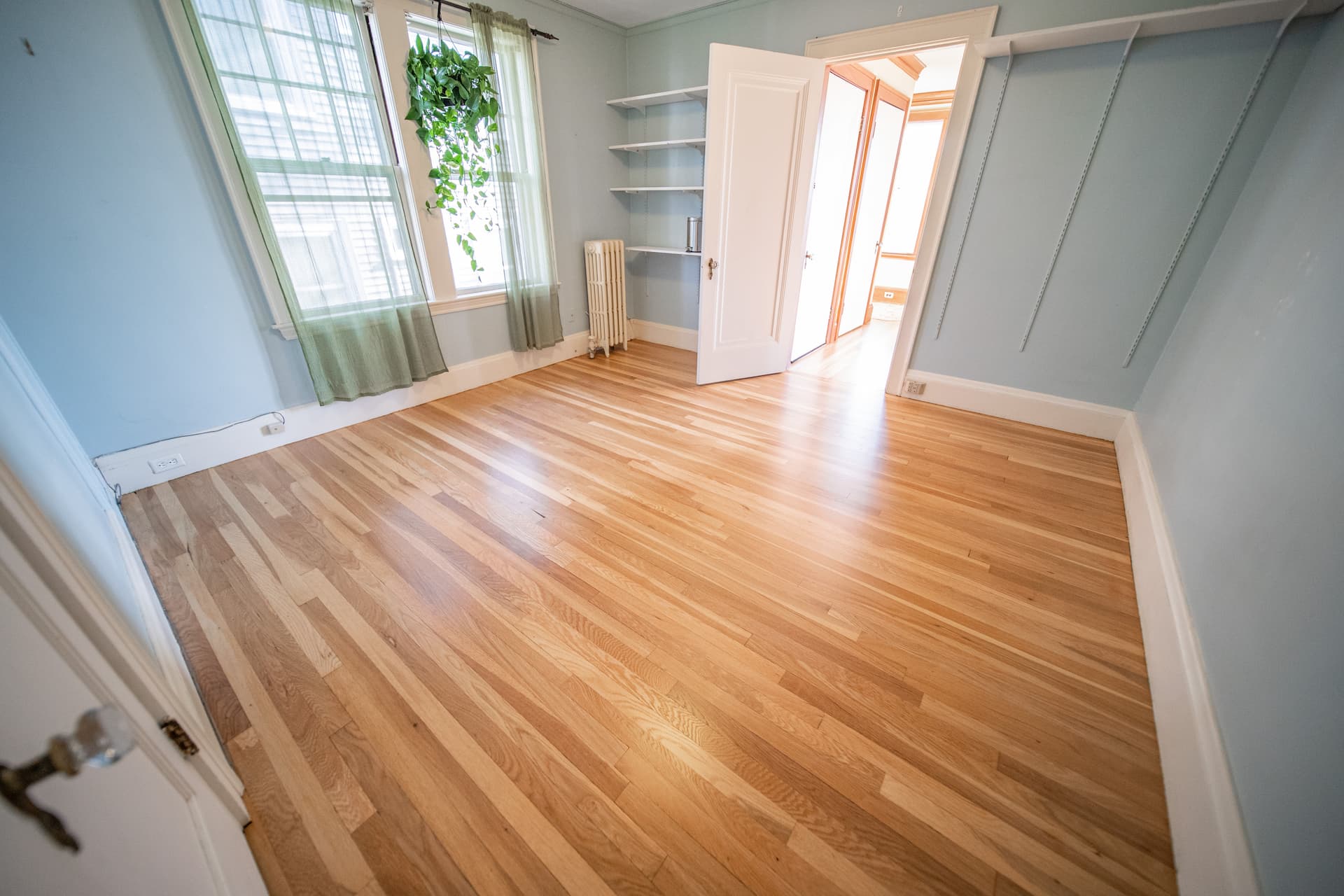
Most can be repaired. If the subfloor reads dry and the boards did not buckle while they dried, sanding and refinishing usually brings the floor back. Buckled, delaminated, or rotted boards get replaced and blended in. Replacing the whole floor only makes sense when damage covers most of the room or the subfloor has given out.
Often, yes. Cupping comes from a moisture imbalance between the top and bottom of the boards. Once the readings go back to normal, many floors flatten on their own over a few weeks. We sand only after that, because sanding a still-cupped floor locks the shape in as crowning.
Sanding and refinishing after dry-down runs $4-9 per square foot with Weles, and board replacement is priced per board in the written scope. Industry-wide, hardwood water damage repairs run $10-80 per square foot depending on severity (Modernize, 2026). You get one fixed estimate after assessment.
Usually yes for sudden, accidental events like a burst pipe or a broken appliance line, and usually no for slow leaks or outside flooding, which needs its own flood coverage (Nationwide). We give you the photos, moisture logs, and itemized estimate your claim needs.
A few days for a small spill, several weeks for a soaked floor. We track it with moisture meters, not a calendar: repairs begin when the boards and subfloor return to their normal range, not on a set date.
Stop the source, get standing water up with towels or a wet vacuum, move rugs and furniture off the area, and keep the air moving. Then have the floor looked at, even if it seems fine once dry. Our wood floor water damage guide covers the first steps in detail.
Not automatically. A surface spill that dries quickly usually leaves no mark. Engineered boards cannot handle soaking the way solid hardwood can, though: once the core swells or the layers separate, those boards get replaced instead of sanded.
Contact Us
Water on the floor right now, or a stain you've been staring at for months? Start with a call either way.
How to Contact us?
Reach us by phone, send us an email, or simply fill out the form and we'll get back to you as soon as possible.
- Phone
- (617) 618-8395
- weles.usa@gmail.com
- Showroom
- 800 Boylston St, Chestnut Hill