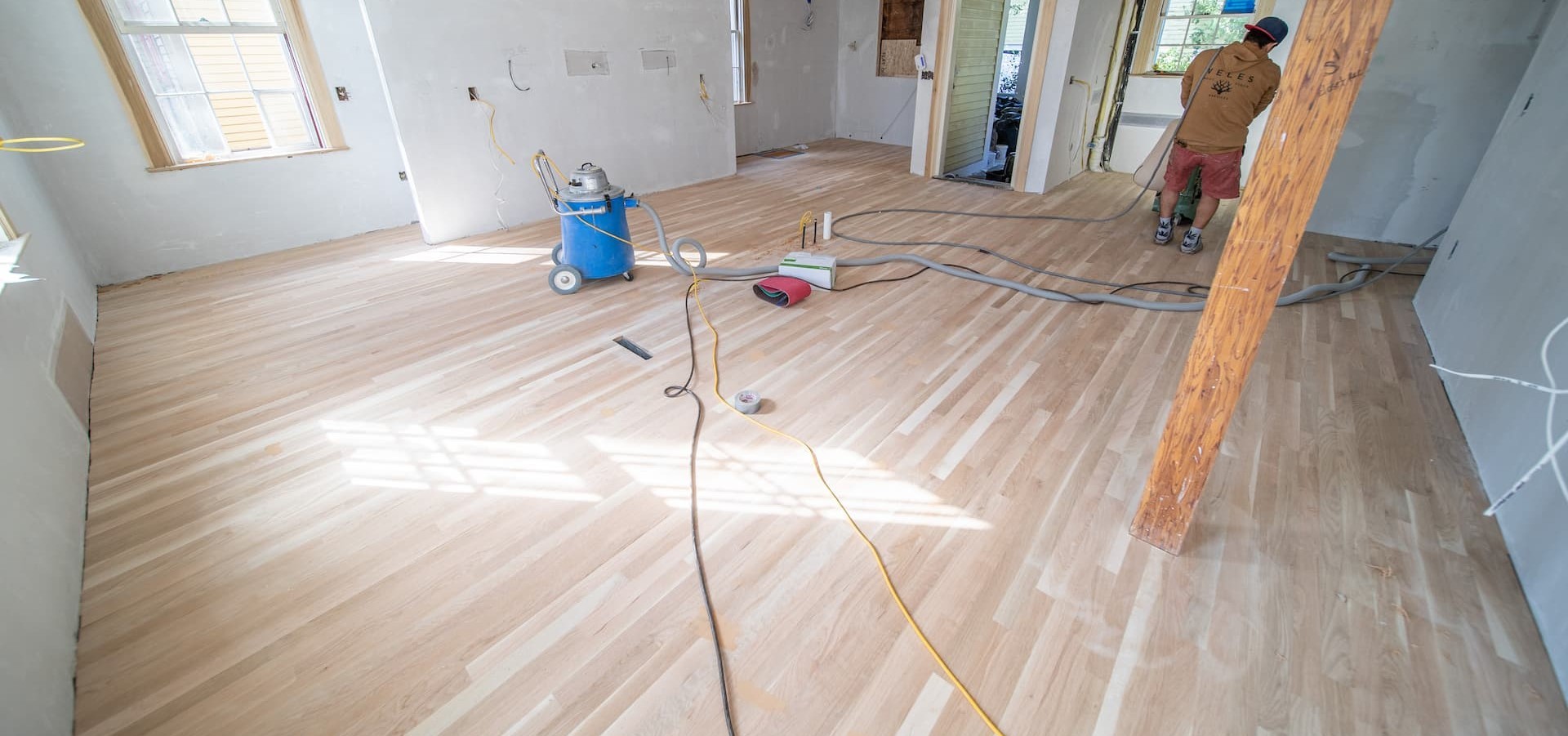





Wood floor water damage is not always obvious right away. A hardwood floor can look dry on the surface while moisture is still sitting between the boards, under the finish, or inside the subfloor. That hidden moisture is what causes cupping, crowning, buckling, dark stains, loose boards, and musty odors.
If the water was cleaned up quickly and did not reach the seams, the floor may only need monitoring. If water got under the hardwood, stayed for several hours, or came from a leak, appliance, flood, or plumbing failure, the floor should be checked before sanding, refinishing, or replacing boards. The goal is not just to make the floor look better. The goal is to make sure the wood and subfloor are dry and stable first.
Flooring specialist tip: Do not sand a cupped or wet hardwood floor too soon. If the top dries faster than the bottom, sanding can flatten the floor temporarily and leave it crowned later when the boards finish drying.
What Water Does to Hardwood Floors
Hardwood expands when it absorbs moisture and shrinks when it dries. A floor finish helps protect the surface, but it does not make wood waterproof. Water can enter through seams, board ends, nail holes, scratches, transitions, baseboards, and the unfinished underside of the planks.
Once moisture reaches the lower part of the board or the subfloor, drying becomes slower and more complicated. The top of the floor may feel dry, but the wood below can still be wet. That uneven drying is one of the reasons water-damaged wood floors change shape after the leak seems fixed.
“The key to mold control is moisture control.”
— U.S. Environmental Protection Agency
For hardwood floors, moisture control means more than wiping up visible water. It means checking whether the boards, underlayment, and subfloor have returned to a safe moisture level before repair work begins.
Signs of Water Damage on Wood Floors
The most common sign is cupping. This happens when the edges of a board rise higher than the center. Cupping often means the underside of the board has more moisture than the top. Crowning is the opposite: the center of the board rises higher than the edges. This can happen when a floor dries unevenly or when a cupped floor is sanded before it is dry.
Buckling is more serious. It means the boards have lifted away from the subfloor. This usually happens when water pressure, expansion, or trapped moisture pushes the flooring upward. Buckled floors often need board removal, subfloor inspection, and replacement.
Other signs include dark stains, white or cloudy finish, peeling polyurethane, raised seams, soft or spongy boards, new gaps, squeaks, movement underfoot, water marks near walls, or a musty smell. If water squeezes out between boards when you step on the floor, moisture is likely trapped below the surface.
What to Do First After Water Gets on a Wood Floor
The first response matters. Quick cleanup can prevent minor spills from becoming a repair project, but aggressive drying or sanding can make the damage worse. Use these steps as a practical first response.
Step 1: Stop the water source
Shut off the appliance, plumbing line, supply valve, or source of the leak if it is safe to do so. If the water is from a major plumbing issue, storm flooding, or contaminated source, do not treat it like a normal spill.
Step 2: Remove standing water and wet items
Use towels, a wet/dry vacuum, or safe extraction methods to remove visible water. Move rugs, mats, cardboard boxes, furniture, plants, and anything else that can trap moisture against the floor.
Step 3: Start controlled drying
Use airflow and dehumidification, but avoid high heat. Heat can dry the top of the boards too quickly while moisture remains below. If water reached seams, walls, or baseboards, the floor may need professional drying and moisture testing.
Step 4: Document the damage
Take photos and videos before moving too much around. Document the water source, affected rooms, stains, lifted boards, and any professional moisture readings. This can help with repair planning and insurance review.
Can Water-Damaged Wood Floors Be Repaired?
Yes, water-damaged wood floors can often be repaired, but the right repair depends on the depth of the damage. A surface stain is different from moisture under the boards. Light finish damage may be solved with recoating or refinishing. Buckled boards, soft subflooring, mold odor, or delamination usually need more invasive repair.
| What you see | What it may mean | Likely repair path |
|---|---|---|
| Small spill, cleaned quickly, no shape change | Surface exposure only | Dry, monitor seams, no major repair if the floor stays stable |
| Cloudy finish or light surface stain | Finish damage or shallow moisture mark | Spot repair, screen and recoat, or refinishing |
| Cupped boards | Moisture imbalance between top and bottom of boards | Drying first, then evaluate sanding or refinishing |
| Buckling or lifted boards | Expansion pressure or water below the floor | Board removal, subfloor drying, replacement boards |
| Musty odor, mold, soft subfloor, contaminated water | Moisture problem below the visible floor | Professional remediation and partial or full replacement |
Water Under Hardwood Floors Is the Bigger Risk
Water under hardwood flooring dries slowly because air cannot move freely below the boards. The surface may look better after cleanup, but moisture can stay trapped in the subfloor, underlayment, or bottom side of the flooring. This can lead to delayed cupping, buckling, odor, mold growth, and fastener failure.
Professional water damage work often follows recognized restoration standards such as the IICRC standards for water damage restoration. For wood floors, a flooring specialist should also evaluate whether the boards are still stable, whether the subfloor can hold fasteners, and whether refinishing will actually solve the problem.
Solid Hardwood, Engineered Hardwood, and Laminate Are Not the Same
Solid hardwood usually has the best repair potential because it can often be sanded and refinished if the boards are dry, stable, and thick enough. But even solid hardwood may need board replacement if it is buckled, cracked, moldy, or badly stained.
Engineered hardwood depends on the thickness of the wear layer and the condition of the core. Some engineered floors can be lightly refinished. Others cannot. If water causes the layers to separate or swell, replacement is usually more practical than sanding.
Laminate flooring is different from hardwood. It may look like wood, but the core often swells after water exposure. Once laminate bubbles, softens, or lifts, it usually cannot be restored like real wood flooring. Damaged planks normally need replacement.
-
Check near dishwashers, refrigerators with water lines, washing machines, exterior doors, bathroom entries, radiators, potted plants, aquariums, sliding doors, basements, and crawl space access points. Slow leaks in these areas can damage hardwood before standing water is visible.
Should You Refinish a Water-Damaged Hardwood Floor?
Refinishing can help when the boards are dry, flat enough, and structurally sound. It can remove some stains, worn finish, and shallow surface damage. It will not fix active moisture, wet subflooring, loose boards, mold, or severe movement.
Before refinishing, the flooring and subfloor should be checked with a moisture meter. A floor that is still drying can change shape after sanding. This is why a good hardwood repair process starts with inspection and moisture readings, not with a sander.
When Replacement Is the Better Option
Replacement is usually better when boards are buckled, cracked, loose, moldy, delaminated, or damaged by contaminated water. It may also be needed if the subfloor is swollen, soft, or no longer holds nails or staples properly.
Partial replacement can work when the damage is limited and matching flooring is available. A skilled installer can lace new boards into the existing floor and blend the repair with sanding and finishing. Full replacement may be needed when damage is widespread, the flooring cannot be matched, or the subfloor needs major repair.
How Much Does Wood Floor Water Damage Repair Cost?
The cost depends on the size of the affected area, flooring type, board thickness, finish type, water source, subfloor condition, and repair method. Drying and monitoring a small area is very different from removing boards, drying the subfloor, replacing hardwood, sanding, staining, and finishing an entire room.
Insurance may help in some cases, but coverage depends on the cause of the water damage and the terms of the policy. Sudden and accidental water damage is usually treated differently from a slow leak or maintenance issue. Flood damage is often separate from standard homeowners insurance. For flood-related coverage, homeowners can review information from the National Flood Insurance Program.
How to Prevent Future Water Damage
Clean spills quickly and avoid wet mopping. Use a damp microfiber mop instead of soaking the floor. Do not use steam cleaners on hardwood. Place mats near exterior doors, sinks, and appliances, but avoid leaving damp rugs or rubber-backed mats on the floor for long periods.
Check appliance water lines, dishwasher hoses, washing machine connections, refrigerator lines, radiators, and plumbing under sinks. Keep indoor humidity stable and pay attention to basements and crawl spaces, because moisture below the floor can affect hardwood above it.
When to Call a Hardwood Flooring Professional
Call a professional if the floor is cupping, buckling, lifting, smelling musty, showing dark stains, or staying damp after cleanup. You should also get help if water came from a plumbing leak, appliance failure, storm, flood, or if you think moisture reached the subfloor.
A proper inspection should include the affected area, nearby boards, baseboards, transitions, accessible subfloor areas, and moisture readings. This helps determine whether the floor needs drying, refinishing, board replacement, or full replacement.
FAQ About Water-Damaged Wood Floors
Sometimes. Minor cupping may improve after controlled drying, but stains, buckling, loose boards, and finish damage usually need repair. The floor should be checked for moisture before sanding or refinishing.
Damage can start quickly if water enters seams or sits on the floor. The timing depends on water volume, finish condition, wood species, humidity, temperature, and subfloor type. Fast cleanup lowers the risk, but hidden moisture can still cause delayed damage.
Sanding can remove some stains and surface damage, but only after the flooring and subfloor are dry. Sanding too early can cause crowning and uneven boards later.
Water under hardwood can stay trapped between the boards and subfloor. This can cause cupping, buckling, odor, mold risk, fastener failure, and subfloor damage. Surface drying is not enough when moisture is below the floor.
Stable boards with cosmetic damage may be refinished. Buckled, cracked, loose, moldy, or delaminated boards usually need replacement. The decision should be based on moisture readings and the condition of the subfloor.
Need Help With Water-Damaged Hardwood Floors?
If your hardwood floor has signs of water damage, get it inspected before sanding, refinishing, or replacing boards. Weles can assess the condition of your wood flooring, identify the practical repair options, and help you decide whether drying, refinishing, board replacement, or new installation makes sense for your home.
Request an estimate from Weles before the damage spreads or becomes harder to repair.
Questions or Feedback?
If you want us to review your floor case or clarify anything in this guide, send us a note.
Email: weles.usa@gmail.com