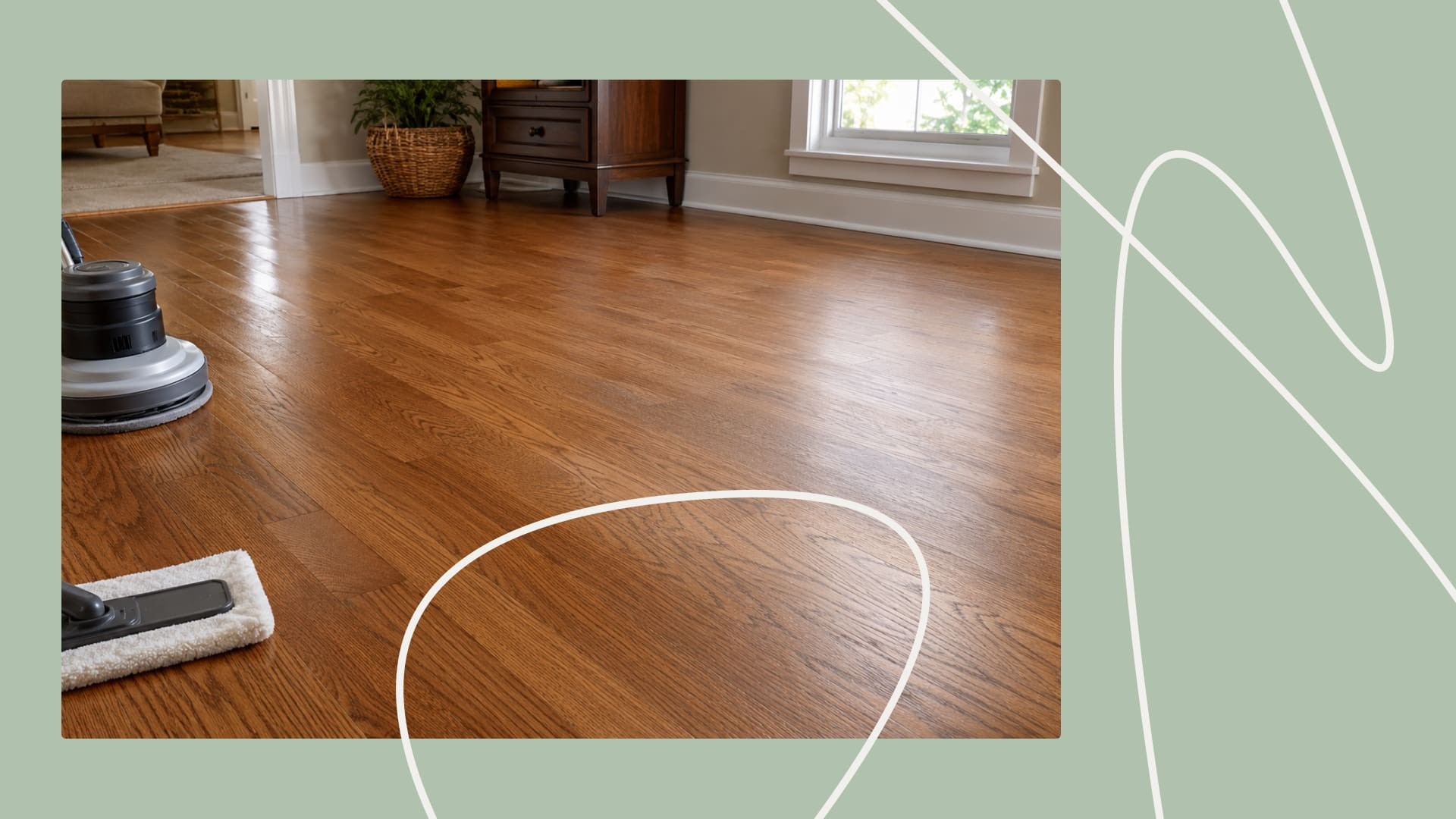





Dull hardwood floors don't always need a full sanding. The problem in many homes is a dirty film, light surface scratches or a tired topcoat that can be improved with cleaning, buffing or a maintenance coat. The key is to know what condition you are in before you apply a buffer, polish, wax or polyurethane.
If you are looking for ways to buff and shine hardwood floors, start with this rule: buffing is on the finish, not deep inside the wood. It can help improve light scuffing, cloudiness, traffic film, and mild dullness. It will not remove deep gouges, black pet stains, gray water-damaged boards, bare wood spots, or finish that is peeling away from the floor.
Quick answer: If the finish is good but dull on the floor, buffing or screening and recoating may restore the shine. If the damage penetrates the finish into the wood, the floor will usually need to be sanded and refinished instead.
Hardwood flooring decision guide
Can you buff and shine this hardwood floor?
Answer a few quick questions to determine if your floor likely needs to be cleaned, lightly buffed, screened and recoated, fully refinished, or professionally inspected before applying products.
First, check why your hardwood floors look dull
There are several reasons for dull hardwood floors. Dust and grit can cause tiny scratches in the surface of a floor making it look flat. Old cleaner, oil soap, wax or polish can leave a film that might make it look cloudy. In high traffic areas the clear finish may wear thin. These problems look alike from a distance, but they don’t require the same fix.
Buffing may help when you see:
Light scuffing, dull traffic lanes, mild haze, cleaner residue, uneven gloss but still clear finish covers the wood.
Buffing is not enough when you see:
Deep scratches. Bare wood. Gray boards. Black stains. Peeling finish. Water damage. Cupping. Parts where the finish has worn off.
The National Wood Flooring Association’s wood floor maintenance guidance recommends routine sweeping, dust mopping or vacuuming on the bare-floor setting, cleaning up spills quickly and using a cleaner made for the floor’s finish.
Avoid using wet mops or steam mops, which will damage the finish and the wood over long periods of time.
National Wood Flooring Association
That warning is important because many shine problems are caused by too much moisture or the wrong cleaner. A wet mop can force water into crevices. Heat and moisture can be driven into the finish by steam. Harsh cleaners can take the shine off the topcoat. If there is any residue on the floor, buffing without cleaning first will spread the film, and the haze will be worse.
Buffing, polishing, waxing, recoating, and refinishing are not the same
These words are often used by homeowners as though they mean one service, but they are different processes. This is important because the wrong method can cause cloudiness, coating failure or a floor that needs to be sanded sooner than expected.
| Method | What it does | Best for | Not enough when |
|---|---|---|---|
| Cleaning | Removes dirt, dust, and cleaner residue from the surface | Sticky, hazy, or lightly dull floors | The finish is worn through |
| Buffing | Lightly abrades or polishes the existing finish | Light scuffs, mild dullness, and prep before a new coat | There are deep scratches, stains, or bare wood |
| Polishing | Adds a compatible shine product over the finish | Some finished floors after proper cleaning | The finish type is unknown or buildup already exists |
| Screen and recoat | Lightly abrades the old finish and adds a fresh coat | Dull polyurethane floors with intact finish | The floor has wax, oil contamination, or exposed wood |
| Sanding and refinishing | Removes the old finish and exposes fresh wood | Deep damage, color changes, bare wood, and failed coatings | The floor has too little wear layer left |
The NWFA explains in its guide to refinishing wood floors that if your floors begin to look dull, a maintenance coat can help. Part of that process is to clean the existing finish, lightly sand it and add a fresh coat. If the floor has deep scratches, dents, other damage or exposed bare wood, the full refinishing route is usually the better option.
Identify the finish before you buff
Don't buff and shine hardwood floors until you have a good idea of the finish. Modern hardwood floors are often finished with polyurethane or another surface finish. Older floors may have wax, shellac, varnish or oil on them. Prefinished floors may have factory finishes that won’t behave the same as site-applied polyurethane.
The NWFA guide to wood floor finish types divides finishes into surface finishes and penetrating finishes. Surface finishes are a protective coating on top of the wood. Penetrating finishes, such as oils and hard wax oils, seep into the wood. This is important because a clean and intact polyurethane floor can often be screened and recoated, whereas waxed or oiled floors usually require a different maintenance system.
A simple clue from the field is how the floor fails. If the surface is scratchy with fine white lines and dull traffic lanes, the problem is in the finish. If you catch your fingernail on the scratch or the wood appears gray or raw, it is deeper. If you rub a small, concealed spot and a white rag picks up a waxy or oily film, don’t apply polyurethane until the contamination is properly dealt with.
How to buff and shine hardwood floors step by step
Then move furniture, rugs and anything that could drag grit across the floor. Vacuum with a bare floor setting or soft brush attachment. Be sure to pay special attention to edges, corners and gaps between boards. Any grit left can become like sandpaper when buffing.
Then, clean the floor with a hardwood-safe cleaner that matches the floor’s finish. Use a lightly damp microfiber mop, not a wet mop. If you are unsure of which cleaner is safe to use, follow the instructions of the flooring or finish manufacturer. Bona’s hardwood floor cleaning guide is a good resource for general homeowner maintenance, as it covers cleaners and tools made for wood floors.
Allow the floor to dry thoroughly after cleaning. If you intend to recoat, buffing a damp floor could spread residue and possibly impact adhesion. For simple shine restoration, always start with the least aggressive process: a soft white pad or microfiber buffing pad. Where possible work with the grain of the boards, work steadily and don't sit in one spot with the buffer running. The objective is to flatten the surface, not grind through the finish.
If the work is a screen and recoat rather than just polishing, it’s more technical. The existing finish must be cleaned, lightly abraded, vacuumed thoroughly, tacked clean and recoated with a compatible wood floor finish. That’s where a lot of DIY jobs go wrong. Any cleaner residue, wax, oil or dust left on the floor can cause the new polyurethane to peel, bubble, fisheye or cure with visible imperfections.
Buffing polyurethane floor: what to know before recoating
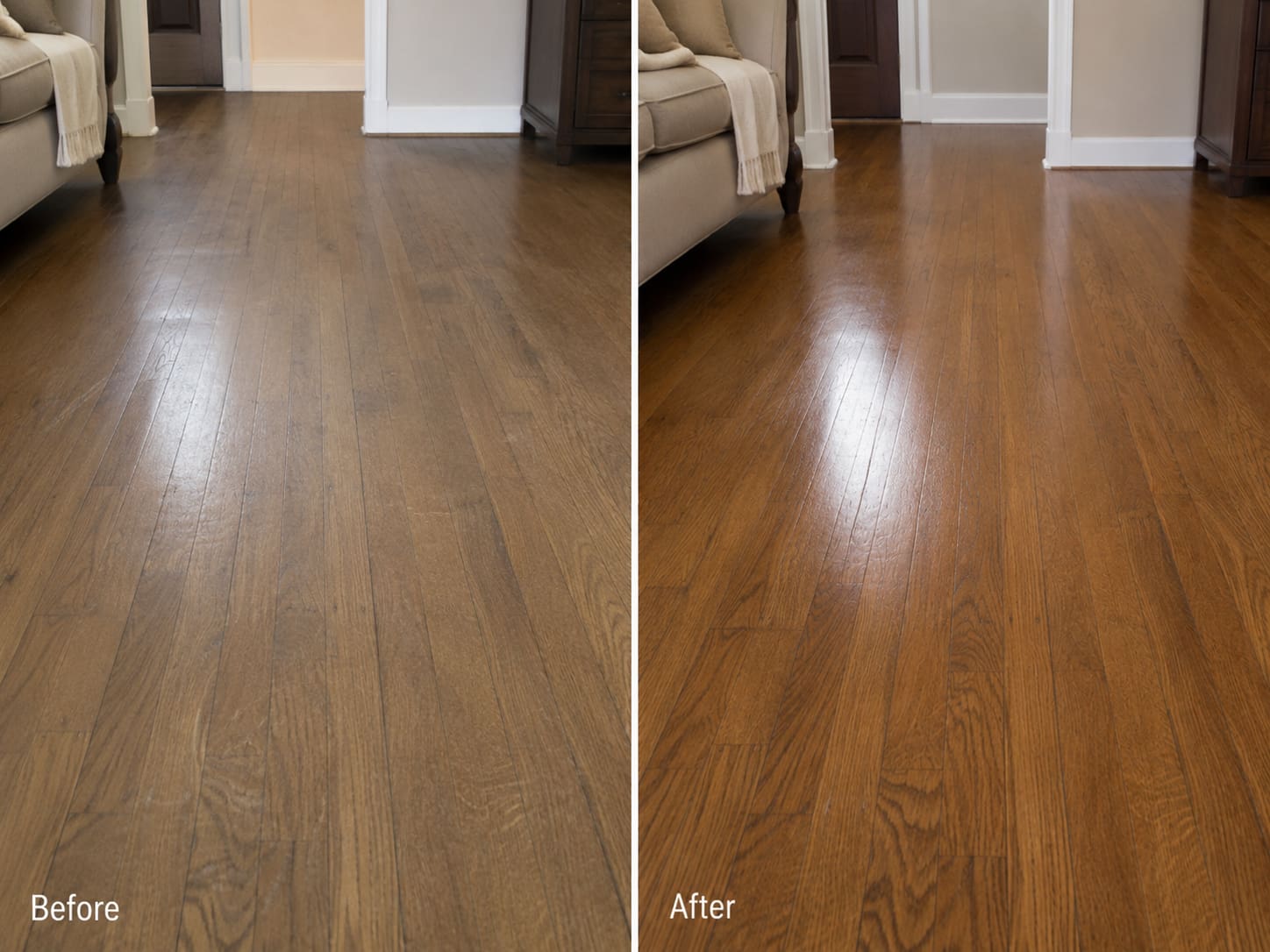
If the existing polyurethane finish is still in good shape, a screen and recoat can refresh worn traffic lanes and provide a more uniform sheen.
Buffing polyurethane floor finishes is a common practice but it must be done for the correct reason. If the polyurethane is still adhering well but just looks dull, a light abrasion followed by a maintenance coat of a compatible finish will restore protection and improve the sheen. If the polyurethane is cracked, peeling, worn to the bare wood, or contaminated with wax, just buffing won't do the trick.
Set realistic expectations for a before and after polyurethane job. Before buffing and recoating the floor may have dull traffic lanes, light scuffs, cloudy patches, and uneven sheen. Once recoated, the surface may appear more uniform, and protected, and may have a satin, semi-gloss or gloss look, depending on the finish used.
Polyurethane won’t cover up deep dents, black stains, pet damage or sanding marks trapped under the old finish. A new coat will bring clarity and shine over the existing surface which can make the flaws more apparent. When the old finish has failed, sanding and refinishing usually gives a cleaner before-and-after result than trying to buff and coat over damage.
If polyurethane has recently been applied, follow the instructions of the finish manufacturer for drying, recoating and curing. Timing is not the same for all products. Water-based and oil-based finishes perform differently and jobsite conditions such as temperature, airflow, humidity and coat thickness impact results.
What buffing can and cannot fix
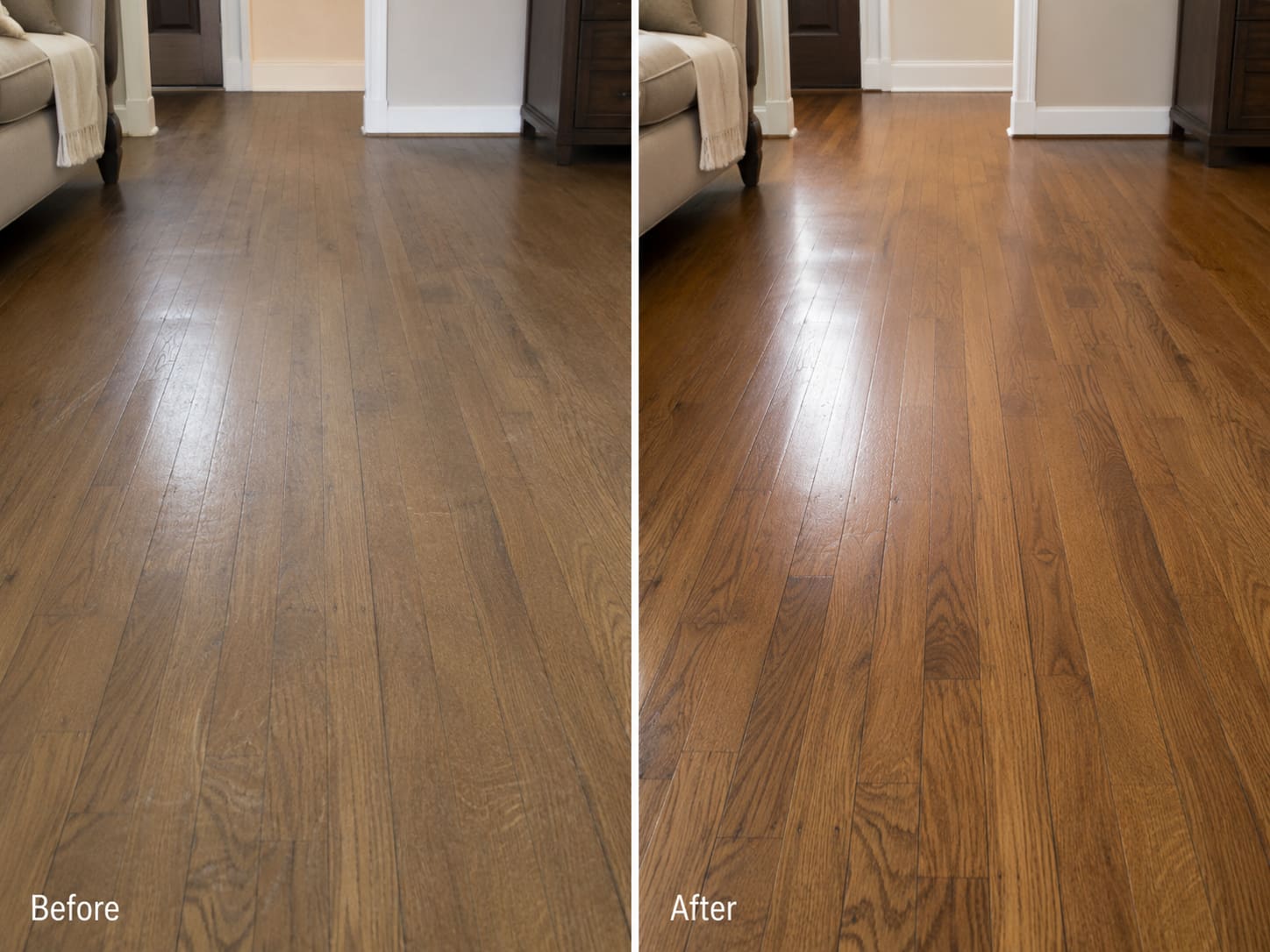
If the finish is still good, light surface dullness and haze can often be removed by buffing.
Buffing can bring hardwood floors back to life if the dullness is on the surface. It can minimize the appearance of light surface scratches, clear up some hazing, even out a slightly dull finish, and get a solid finish ready for a new coat. This is particularly helpful if the floor still contains sufficient clear finish to protect the wood.
You can not buff in lost finish. If you see any gray or dark spots where the wood has absorbed moisture and dirt, the protective coat is probably worn through. If your fingernail catches on scratches, they are probably deeper than the top coat. If boards are cupped, swollen, split or stained black, the problem is more than shine. A buffer can make these areas look cleaner, but it won’t fix the damage underneath.
Common mistakes that make hardwood floors harder to restore
First mistake is to put shine products before cleaning. Polish over dirt is shiny dirt. Waxing over polyurethane can lead to adhesion problems down the road. Oil soap can leave a film that attracts more dust. Vinegar might sound natural but acidic cleaners can dull some finishes over time. Steam mops and wet mops can harm the wood and finish, especially around the seams.
The second mistake is using the wrong pad or the wrong screen. An overly aggressive pad can cut into the finish. If the pad is too soft it may burnish rather than remove residue. The finish on factory finished floors can be very hard and may not react the same as a site finished polyurethane floor. Aggressive sanding is risky because some engineered floors also have a thin wear layer.
The third mistake is no dust control before recoating. Polyurethane shows dust, hair, applicator marks, and missed debris. Even if you buff a floor properly it can look bad if the prep before coating is rushed.
Safety note for older homes
Buffing is generally less abrasive than a full sanding, but any process that abrades old coatings can create dust. This is more important in older homes. The EPA Renovation, Repair and Painting Program explains that renovation, repair or painting work in pre-1978 homes can create dangerous lead dust when lead-based paint is disturbed.
If your home was built before 1978 and painted surfaces may be disturbed during your flooring job, use appropriate lead-safe work practices and consider hiring a certified professional. Even if the floor itself is not painted, sanding and renovation work can disturb trim, baseboards, thresholds, stairs, and painted surfaces nearby.
When should you call a hardwood flooring company?
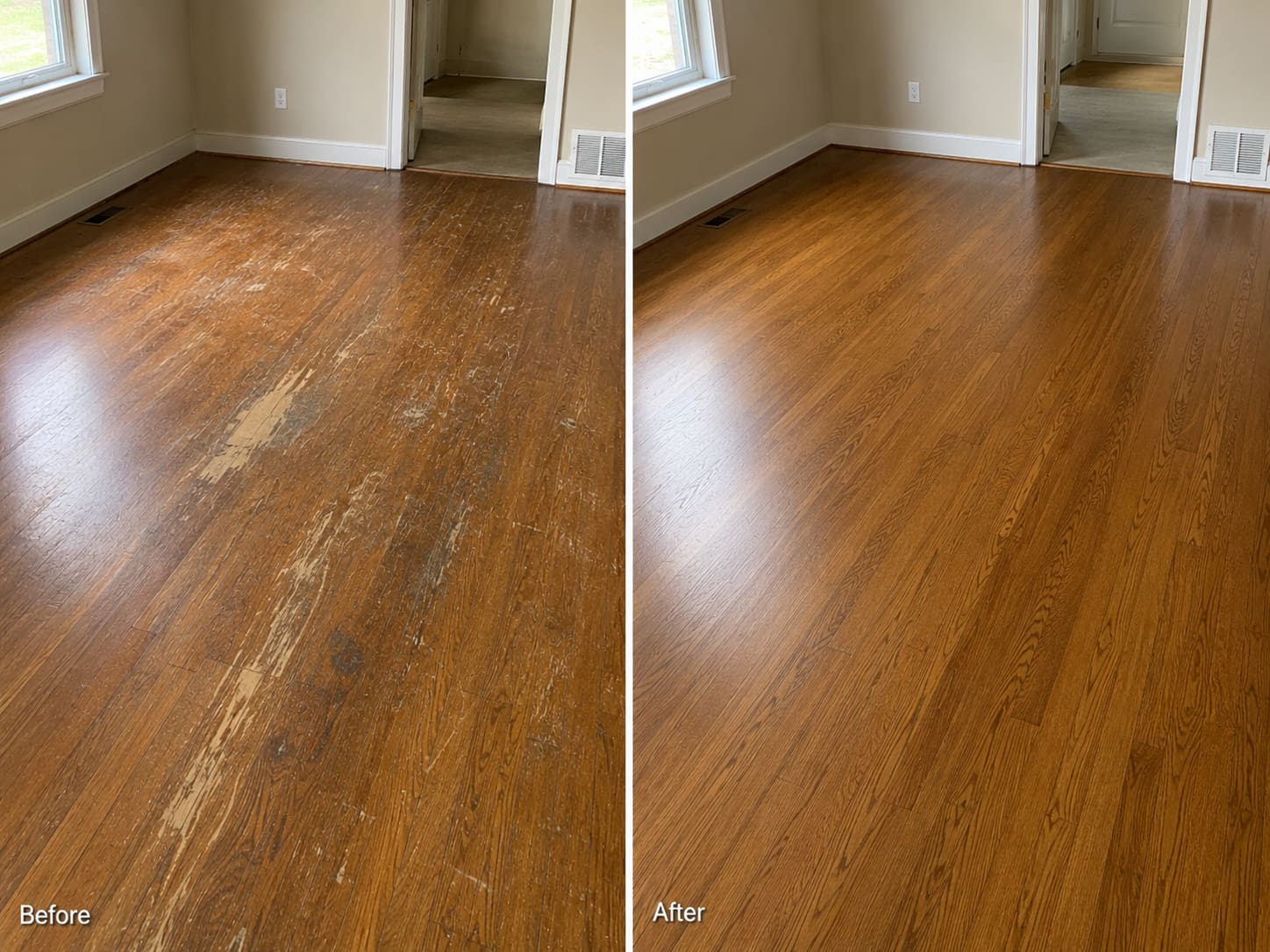
If you know the finish and if the floor has just a little haze then DIY cleaning and light hand buffing may be reasonable. If you don’t know what kind of finish it is, if the floor has wax buildup, if there’s peeling polyurethane, if the home has older coatings, or if you want to add a new finish coat, it’s safer to have a professional inspection.
You should also call a hardwood flooring company if the floor has extensive scratches, exposed wood, water stains, pet stains, loose boards, cupping or heavy wear in traffic lanes. These problems need more than a polish. They need the proper repair plan. Sometimes that’s a screen and recoat, sometimes board repair, sometimes full sanding and refinishing.
And the practical question for homeowners isn’t just, “How do I make my hardwood floors shine?” It is “How do I fix the floor and not make a bigger mess?” If the finish is still sound, buffing and recoating can extend the life of the floor. Refinishing is usually the cleaner and longer-lasting option if the finish is already gone.
FAQ: buff and shine hardwood floors
Yes if the dullness is mainly in the finish or caused by light scuffs and residue. Buffing will not fix deep scratches, exposed wood, pet stains, water damage or peeling finish.
Yes, polyurethane floors often can be buffed or screened if the finish is clean and in good condition. If the floor is waxed, has oil residue or worn-through areas, recoating may fail unless the surface is properly prepared.
Buffing can reduce the appearance of light surface scratches in the finish. It will not remove deep scratches into the wood. Usually those have to be sanded and repaired or refinished.
Buffing is working on the existing finish. Refinishing sands down the old finish to expose the wood so the floor can be stained and sealed again. Refinishing is more invasive, but it’s necessary when the damage is below the topcoat.
Only if the floor has a waxable finish. Never wax a polyurethane floor without first consulting a flooring professional. Wax can build up and make future recoating difficult.
If the floor is dull but the finish is still intact, buffing or screen and recoating may be sufficient. If the floor is bare wood with deep scratches, gray boards, dark stains or peeling finish, refinishing is usually the better choice.
Bottom line
Start with diagnosis to properly buff and polish hardwood floors. Clean it up first, figure out the finish, use the least aggressive buffing method that will fix the issue, and don’t use wax or polish unless you know it’s compatible. If the finish is worn but sound, a screen and recoat can restore the shine and protection. If the wood has damage, then it is usually better to do a full refinish.
Weles can check the finish, advise on buffing, recoating or refinishing and help bring the floor back without unnecessary sanding where a lighter maintenance option will do the job.
Questions or Feedback?
If you want us to review your floor case or clarify anything in this guide, send us a note.
Email: weles.usa@gmail.com