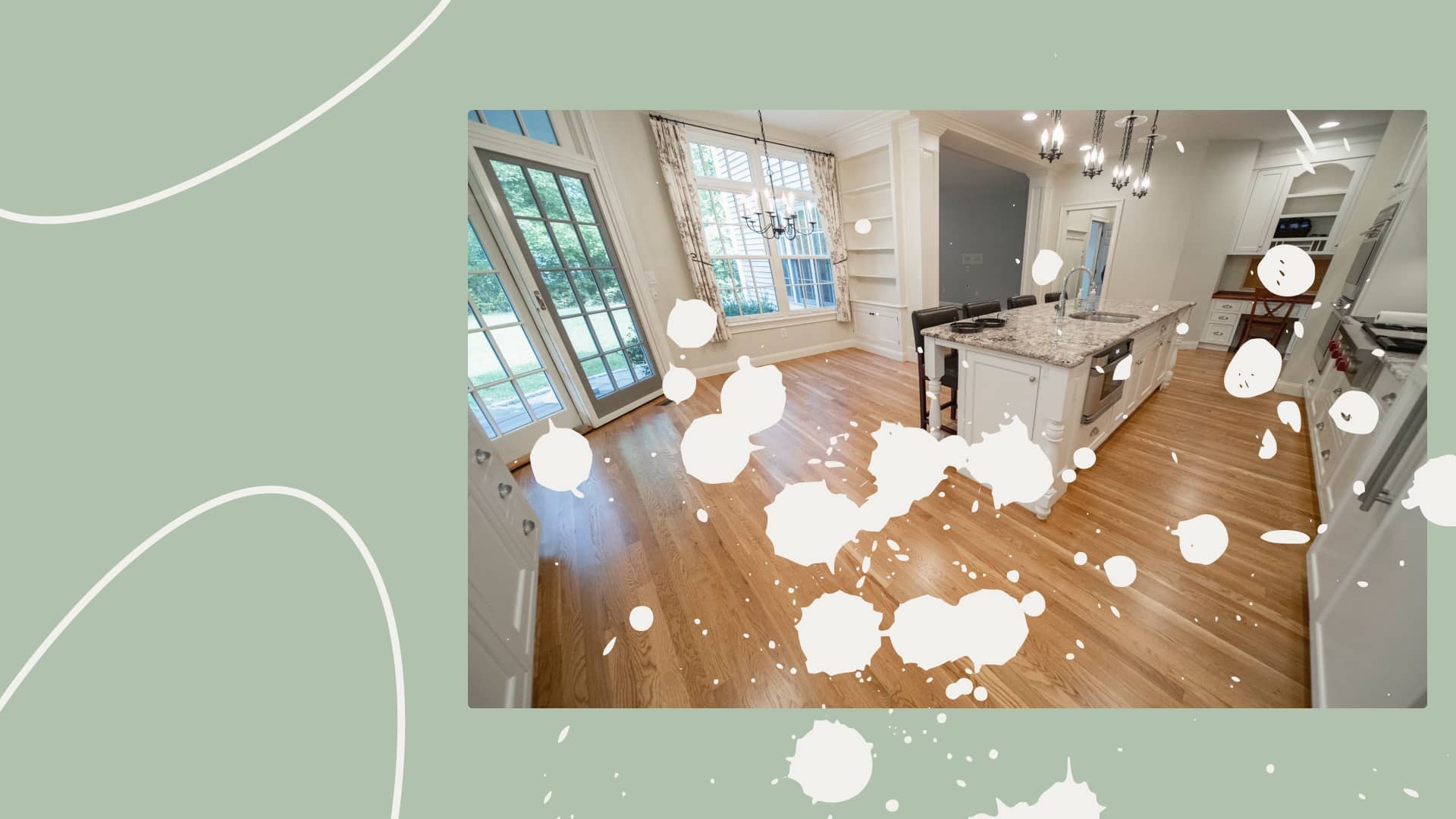





Especially after rolling walls, touching up trim, or doing DIY projects, paint splatters happen. The goal is to remove the paint while maintaining the protective finish on the hardwood. That means working in the right order (gentlest first), with the right tools (plastic, not metal), and keeping moisture and harsh chemicals to a minimum.
Rule of thumb: Before using solvents, start with mechanical lifting (plastic scraping) and gentle cleaning. Over-wetting or over-scrubbing, not the paint itself, causes the majority of floor damage.
Before you start: identify the paint and protect the floor finish
To begin, find out whether it’s water-based (latex) or oil-based. Check the label on the paint can if you still have it. A simple spot test can help if not. Some people use warm water on a cloth to see if the paint softens. If it does, it’s probably water-based. Depending on the type of paint, rubbing alcohol may work differently if water doesn’t. But always test it gently in an area that won’t be seen first.
Step 2: Consider your floor finish. These days, most hardwood floors are sealed with polyurethane or another long-lasting factory finish. However, some older floors or restorations may have finishes like wax or shellac that are more easily damaged by chemicals and heat. If you’re not sure, assume the floor is “sensitive” and be careful: use little liquid, avoid harsh solvents, and avoid metal edges that are too sharp.
Step 3: Test everything in small areas. Try your way first in a hidden place, like a closet, under a vent cover, or close to a wall. Getting rid of paint that doesn’t dull the finish is the best way to do it.
Tools and supplies that are safe for hardwood
You do not need a hard-to-understand kit. You need to be able to control the time, pressure, and moisture.
- Microfiber rags (a number of clean ones)
- Plastic putty knife or a floor paint scraper with a plastic blade (don’t use metal blades on finished hardwood)
- Warm water and a little gentle dish soap
- Denatured alcohol or rubbing alcohol (often good for dried latex paint; use sparingly)
- Paint thinner or mineral spirits (for oil-based paint—use little and let it air out)
- Hair dryer (to soften paint slowly if it’s thick and won’t come off)
- Nitrile gloves and good air flow (open windows; keep away from flames)
| What’s on the floor? | What usually works first | What to avoid on hardwood |
|---|---|---|
| Fresh latex (wall paint splatter) | Blot + warm soapy water + plastic lift | Flooding with water; abrasive pads |
| Dried latex (small dots/drips) | Warm soapy dwell + plastic scrape; alcohol-on-cloth for the residue | Metal scrapers; aggressive rubbing that hazes the finish |
| Oil-based / enamel | Mineral spirits/paint thinner on cloth + gentle wiping | Long solvent soaking; open flames; heavy heat |
| Thick, stubborn paint ridges | Careful softening with a hair dryer + plastic scrape | High-heat guns close to the floor; harsh strippers indoors |
Step-by-step: how to get wall paint off floor (latex/water-based)
A lot of the time, after painting a wall, you end up with little dots, smudges, or a drip line on your hardwood. Follow these steps to safely remove latex paint from wood floors.
1) Move what you can without liquid. A plastic scraper should be used to start if the paint is raised. Hold it low (almost flat) and move it along the grain slowly. Do not cut into the wood; instead, you want to “shear” the paint off the finish.
2) Use warm soapy water to soften the paint. Add some light dish soap to warm water and mix them together. Put a damp (not soaked) microfiber cloth over the paint for 30 to 60 seconds. After a light rub, use the plastic scraper again. Do it again if you need to.
3) Only use alcohol on the tough remains. If you can get rid of the bulk but there is still a thin film, use rubbing alcohol (or denatured alcohol) to wet a clean cloth and gently wipe the spot. Don’t touch it for too long, and don’t pour alcohol on the floor. Remove any remaining residue right away with a slightly damp cloth (only water), then dry the area.
@hardinsonhighstreet The amount of hours I’ve spent scraping my messy paint splatters with my fingernails 😂 this trick makes it so much easier to clean up any messes. Of course prepping with drop cloths or cardboard etc helps too, but sometimes the splatters still find a way! Hope this helps make your next clean up a little easier! . #diyhome #diyhomeprojects #diypainting #cleaninghacks #diyhacks #victorianhome #oldhouselove #ladieswhodiy
♬ take a moment to breathe. - normal the kid
As a warning: Too much moisture is a bigger danger for hardwood than most paint spots. The National Wood Flooring Association says:
Wet mops and steam mops should be avoided because excessive water and steam can dull the finish or even damage the wood.
Think about it the same way: little liquid, quick dry.
For more floor-safe cleaning basics, see the NWFA guidance on cleaning and maintaining wood floors.
Step-by-step: oil-based paint, enamel, and unknown paint
If the paint is oil-based or won’t get soft with warm water and soap, you will need to use a different method. Some solvent-based products can also make some floor finishes less durable, so be careful and follow the rules.
1) Scrape plastic first. Even if the paint is oil-based, lifting the paint slowly will help you use less solvent in the end.
2) Use paint thinner, or mineral spirits, on a cloth, but don’t flood the floor. Lightly rub the paint with a damp cloth, and check it often to make sure you’re not spreading paint that has been softened. Work in small sections. Let air flow through the room and stay away from anything that could start a fire, like candles, pilot lights, or space heaters.
3) Clean and dry it. Once the paint is off, wipe it down with a clean cloth slightly wet with water. Dry it right away. The biggest long-term risk of solvents is that they can leave behind a film that dirt can stick to or dull the finish by working on the spot too much.
If you want to hear from another manufacturer about how to remove paint from hardwood floors, check out Bruce Flooring’s list of ways broken down by paint type and floor finish: methods by paint type and floor finish.
Stubborn paint: thick drips, paint in cracks, and when to stop
When it comes to thick paint lines, controlled heat can help. Don’t think “cook,” but “soften.” In general, a hair dryer is better than a tool with a lot of heat. Warm the paint for a short time, and then use a plastic scraper to lift it. Move the heat source around a lot and be patient. Too much heat can damage or change the color of some finishes.
Don’t dig too deeply when you’re painting in bevels or between boards. Scrub along the groove with a wet cloth and a soft brush, like a soft toothbrush. Then, use a plastic edge to gently lift it out of the way. If the paint is deep in the seam, pulling it out can damage the finish around the edges and make the repair bigger than the splatter itself.
If there are big paint spills or a lot of rooms, don’t go straight to sanding. First, look at the paint to see if it is on top of the finish or if it is buried in bare wood. This could happen on unfinished floors or in places where the finish is worn through. If paint has stuck to visible wood fibers, the surface usually needs to be sanded and refinished by a professional in order to be even again.
When you use chemical paint strippers inside, be careful. The U.S. Consumer Product Safety Commission says:
Paint strippers contain chemicals that loosen paint from surfaces. These chemicals can harm you or cause death if they are not used properly.
Read the label, make sure there is plenty of air flow, and wear the right gloves if you’re thinking about getting a stripper.
For safety guidance, review the CPSC publication What You Should Know About Using Paint Strippers.
A note on methylene chloride products: Stay away from older “heavy-duty” paint removers that have methylene chloride in them. The U.S. Environmental Protection Agency said that consumer paint and coating removers containing methylene chloride could not be made, processed, or sent to consumers because they could cause serious injuries or death. To learn more, go to the EPA’s page about the methylene chloride paint and coating remover rule.
Safety notes: ventilation, flammability, and lead-paint risk in older homes
Flames and air flow: Many popular paint-removal solvents are flammable and can make people feel dizzy or irritated in places that don’t have enough air flow. To get rid of the air, open the windows and use fans. Also, keep solvents away from sparks and open flames. If you’re not sure about safety inside, stop and talk to a professional.
Be careful with lead paint, especially in homes built before 1978. If your “paint on floor” problem involves scraping, sanding, or removing large areas of older paint coats (not just a few fresh dots of wall paint), take the job very seriously. The Centers for Disease Control and Prevention say that renovation tasks like sanding can create dangerous lead dust. For work in older houses that is lead-safe, they suggest hiring EPA-certified contractors. See the CDC overview of lead and paint hazards and the EPA’s Renovate Right guide for prohibited high-dust methods and safer practices.
After you remove the paint: clean-up and finish check
1) Get rid of the gunk. After the paint is off, wipe the area with a clean cloth that is just slightly damp with water. Let it dry. Do not skip this step if you used a solvent. The residue can attract dirt and make the spot look dull over time.
2) Look at the shine from different angles. If the area looks a little cloudy, it could be from light wear or cleaner or solvent residue. Before assuming the finish is ruined, reclean gently and let it dry once more.
3) A professional recoat, not rough DIY scrubbing, may be the best solution if the finish is damaged. Maintaining a floor correctly usually means cleaning it, lightly abrading it (screening), and then recoating it when it loses its shine or has surface wear, instead of using random polishes or strong cleaners over and over again.
Weles Wood Floor Services can help you decide whether a screen-and-recoat or a deeper refinish is the best next step if the paint removal has changed into a finish problem that can be seen. You can request estimate online or look at the hardwood floor refinishing service page to get an idea of what’s usually involved.
FAQ
Rubbing alcohol is frequently used as a controlled alternative for lifting leftover latex paint film when used lightly on a cloth (not poured). It’s important to have short touch time, light pressure, and wipe and dry right away. Test on a small area first.
Metal blades are dangerous on finished hardwood because one slip can damage the finish and wood forever. Choose a plastic scraper made for floors and keep the angle low if you need “blade-like” lifting power.
That usually means the paint is dry, oil-based, or built into texture or seams. First, use a plastic scraper. Next, use a controlled solvent method (alcohol for latex residue, mineral spirits for oil-based residue) while keeping the area well-ventilated and checking small areas.
Many tips for taking care of wood floors say not to use vinegar because it can damage finishes over time. Stick with a wood-floor cleaner made for hardwood if you need to clean after the paint has been removed, and use little water.
Use rosin paper or drop cloths, tape the edges, and clean up any splatters right away. When it comes to textured or angled prefinished boards, fresh paint is much easier to remove than paint that has dried.
Questions or Feedback?
If you want us to review your floor case or clarify anything in this guide, send us a note.
Email: weles.usa@gmail.com