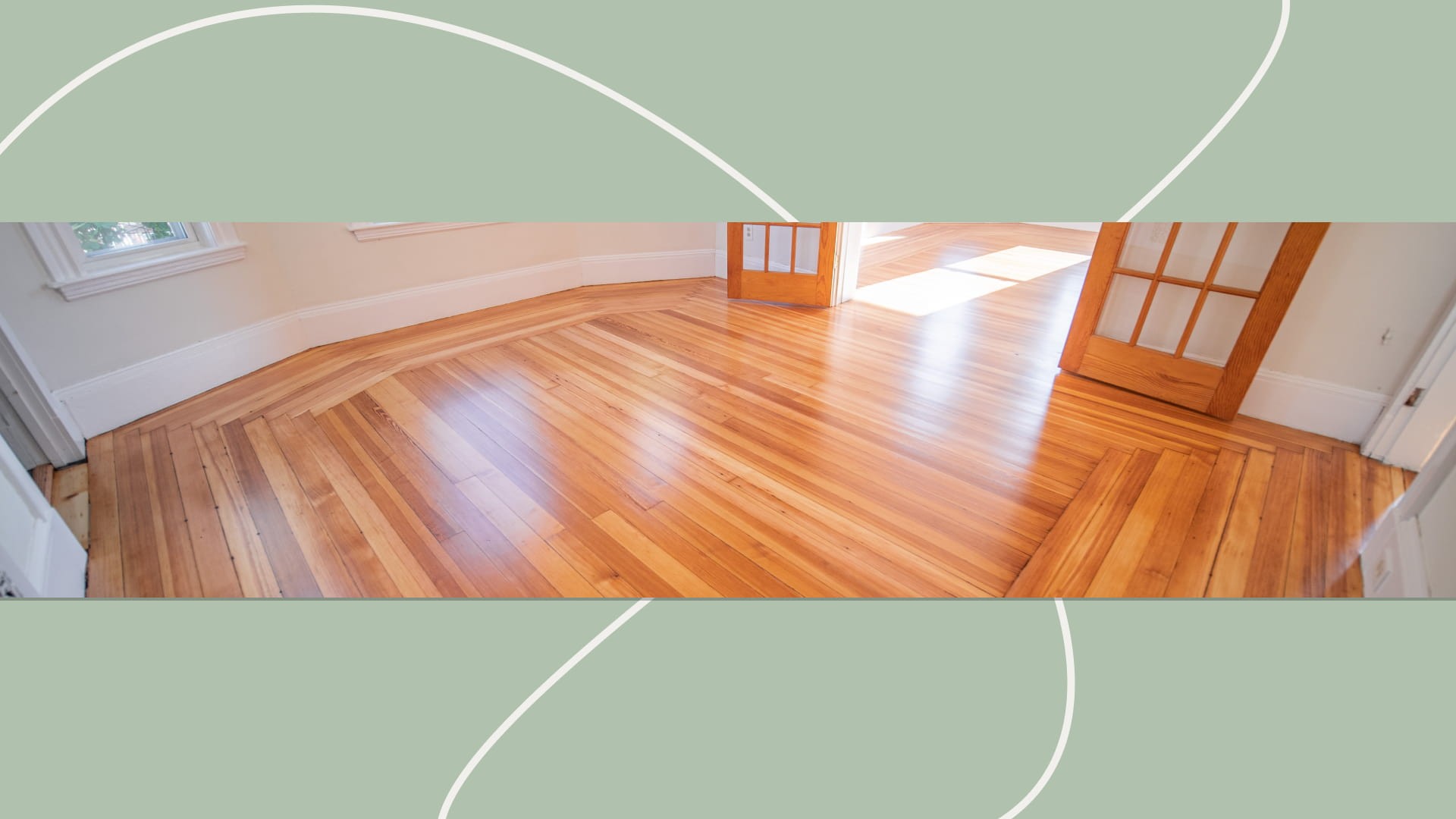





The best thickness for engineered wood flooring is typically 12–15 mm total (approximately 1/2"), with a wear layer of 3–4 mm, for most home applications. This thickness balances durability, stability, and the ability to refinish your floor over time.
However, the ideal thickness can vary based on your needs – thinner boards work in low-traffic or budget scenarios, while extra-thick boards might be used for high-traffic or special situations. In this guide, we’ll explain how to choose the perfect thickness for your project.
Understanding Engineered Wood Flooring Thickness
What Does “Thickness” Mean?
Engineered boards can be described by just two numbers: the overall board thickness and the natural wood wear layer. 15/4 mm - the first number is the total thickness, overall board (15) and the second the real wood wear layer (4).
- Wear Layer: The top layer is the actual hardwood. The larger this layer, the more often these floors can be refinished.
- Core Layer: The base layer consists of plywood or high-density fiberboard (HDF) or a combination of both. It is this layer that gives engineered floors stability and structure.
- Total Thickness: The full board thickness, including both the wear layer and core layers.
On average, engineered floors have a total thickness between 8 mm and 20 mm. The wear layer ranges from 1.5 mm to 6 mm. Boards at the far ends of these ranges are rare in stores. The optimal thickness for engineered wood flooring is about 12–15 mm. Floors in this range (often labeled 1/2″) have a thick enough wear layer for durability and refinishing, without being so thick that they’re hard to install or heat inefficient.
Why Thickness Matters
- Durability & Stability: Thicker boards usually have more layers -> more dimensional stability (resist warping) and can handle environmental changes better. Thicker wear layers also mean the surface can take more wear and tear before wearing through.
- Refinishing Potential: The thicker the wear layer, the more refinishing of hardwood floors can be done. Each refinishing will remove approximately 0.5-1 mm of wood. A 3 mm wear layer can be refinished 1-2 times, and a 4-6 mm wear layer 2-4 times over several decades. A thick wear layer is another guarantee of the longevity of your floors.
- Underfoot Feel & Sound: It's simple, thicker floors feel more substantial and provide better sound insulation. If this is important to you, you should consider thicker engineered flooring options.
- Installation & Height Constraints: Thicker floors may raise room height, affecting door clearances. In renovations, a thinner profile (like 3/8″) may be helpful to match heights with adjacent floors or accommodate door swing.
💡 Pro Tip: NWFA notes that engineered wood floor coverings with a wear layer of less than 2.5 mm are generally unrefinishable, which underscores the importance of choosing the appropriate thickness depending on the intended use
Common Engineered Wood Flooring Thickness Options
| Feature | 3/8" Thick (~9–10 mm) | 1/2" Thick (~12–13 mm) | 5/8"+ Thick (~15–16 mm+) |
|---|---|---|---|
| Wear Layer Thickness | 1.5-2 mm (too thin to sand) | 2.5–3+ mm (Better protection against wear) | 4–6 mm (Approaches solid wood refinishing potential) |
| Finish Coating Quality | Standard factory finish | Higher-quality finish for durability | Premium finishes for longevity |
| Refinishing Potential | Buff and recoat only, no sanding | Can be sanded 1–2 times | Can be sanded 2-4 times |
| Price | More budget-friendly | Slightly more expensive | Highest cost per square foot |
| Availability | Common in budget-friendly lines | Available in a wide range of styles | Less common, mainly in high-end products |
| Installation Methods | Floating, glue-down, nail-down | Floating, glue-down, nail-down | Floating, glue-down, nail-down |
3/8" Thick (~9–10 mm) – Thin Profile Engineered Wood
This is the thinnest common engineered floor. Its wear layer is usually about 1.5-2 mm.
✅ Best For: Ideal for rooms with low and moderate traffic, condos and apartments where floor height is important. This is an economical option, which makes it suitable for projects with a limited budget. In addition, it is easier to cut and install compared to thicker versions.
❌ Trade-offs: The wear layer is too thin to sand: the NWFA says not to sand anything under 2.5 mm. Refinishing means a light buff and a fresh top coat. It also feels less solid underfoot and is not a good fit for rooms with heavy use.
1/2" Thick (~12–13 mm) – Standard Thickness
It is the most popular option for residential homes, offering a balanced combination of durability and affordability. Usually, the wear layer is about 2.5–3+ mm.
✅ Best For: Suitable for almost any residential space, including living rooms, bedrooms and hallways, especially in areas with moderate or heavy traffic. Provides a balance between cost and durability. Provides a firmer feel underfoot compared to thinner options. It can usually be sanded and refinished 1-2 times, which adds years to its life. In addition, it is more resistant to aging and daily wear. Many options of this thickness are still compatible with underfloor heating, as long as the total thickness stays at 18 mm or less.
❌ Trade-offs: Slightly more expensive than 3/8-inch wood, and may require a little more effort to cut or install hardwood floors due to the extra thickness, although this is still acceptable for most projects.
5/8" (15–16 mm) and Thicker – Premium Thickness
Despite the fact that this thickness is less common, it is available for products made of high-quality wood or professionally made wood. The wear layer on these products is often 4-6 mm, which gets close to solid hardwood.
✅ Best For: Designed for commercial spaces with heavy traffic, large open rooms in luxury homes, or for homeowners who prefer maximum durability and a variety of finishing options. These floors have exceptional strength and stability, creating a sense of reliability underfoot. It can be sanded and refinished 2-4 times, so it can last for decades. Its multi-layered construction increases stability, and the extra thickness makes it look more like solid wood.
❌ Trade-offs: More expensive material per square foot and less affordable than thinner options. The total thickness may exceed 18 mm, which may limit compatibility with underfloor heating due to slower heat transfer. With radiant heating, installers usually recommend a board under 18 mm total.
How to Choose the Best Thickness for Your Needs
To determine the best thickness for your engineered wood floor, consider the following factors in your specific context:
Foot Traffic
In areas with heavy traffic = thicker floors. In areas with heavy traffic (hallways, kitchens, family rooms), it is better to use thicker boards (to protect against wear and subsequent finishing). In rooms with low traffic or rarely used (guest rooms, offices with low traffic), thinner boards can be used without problems. For example, if you have children and pets running around in your living room every day, a 1/2″ or more thick floor will hold up better than a 3/8″ thick floor. But in a rarely used office, a 3/8″ floor may be enough.
Subfloor & Installation
When laying engineered wood over concrete or radiant heating, thinner materials can be used. Less material means better heat dissipation, and many 3/8″ engineered floors are specifically designed to be laid on concrete by gluing. However, if the subfloor is not perfectly level, thicker boards, although more rigid, will hide the defects only up to a certain point. Regardless of the thickness, it is always recommended to properly align the floor base. Some installers even prefer 3/8″ over slightly uneven concrete, because the thinner board flexes a little over small dips. Leveling the subfloor still matters most.
When choosing a floating installation, the thickness may affect the strength of the seams with snap-in joints. Very thin engineered floors can appear flimsy, while a 1/2″ joint tends to provide a more stable and reliable connection.
The best approach is to match the thickness to the installation method:
- Glue-down over concrete? Both 3/8" and 1/2" are suitable, but for small variations of floor slabs it is better to use 3/8".
- Nail-down over joists or plywood? A 1/2-inch thick board will provide better grip on nails.
- Floating installation? Thicker boards tend to feel more solid underfoot.
Room Size & Ceiling Height
In renovations, keep in mind that a thicker floor will increase the overall height of the floor. If you have low-clearance doors or need to fit existing walkways, a thinner floor can save time and nerves. In large open rooms, the visual difference between 3/8" and 1/2" is minimal, but some design experts suggest that wider boards in spacious spaces work well with thicker boards to improve proportions.
For small spaces, a very thick floor is not always required — pay more attention to color and style, as durability requirements are usually lower.
Aesthetic Preference
Thickness has a psychological aspect — some homeowners associate thicker floors with higher quality or a feeling that is closer to solid wood. If you appreciate a tighter feel under your feet, subtle details like deeper bevels, or even the sound of footsteps, you might prefer 1/2 inch or thicker. However, after installation, many people will not visually notice much difference between 3/8" and 1/2". Ultimately, if the budget and traffic requirements match, personal preferences become the deciding factor.
Longevity Plans
If durability is the goal - whether it's to preserve the floor in the house for decades or to ensure its durability for future homeowners — buying a thicker material with a larger wear-resistant layer is a smart choice. The thicker wear layer allows for more sanding cycles, which significantly extends the service life of the floor.
Focus on wear layer for longevity:
- The wear-resistant layer with a thickness of 4 mm can usually be sanded 2-3 times during its service life.
- A 1.5 mm wear layer should not be sanded at all. It can only be buffed and recoated.
Budget
Be prepared to pay more per square foot for thicker boards due to the material of manufacture and generally higher quality. If you're on a tight budget, the 3/8″ size may allow you to achieve the look you want for less money. If you have a flexible budget and consider flooring as a long-term investment, a thicker option can pay off with durability.
In short, choose the thickness of the floor covering according to your preferences: intensive use or long-term -> thicker; light use or temporary -> thinner. If in doubt, choose a bit thicker for peace of mind, if it fits your budget and installation restrictions.
Recommended Thickness for Common Scenarios
Although the "best" thickness for engineered hardwood may depend on many factors, here are our recommendations for a few common situations:
✅ General Homes: 1/2" (12–15 mm) for best balance.
If you are still unsure, then for most homes, the optimal overall thickness is about 1/2″ (12-15 mm) with a wear layer of 3 mm or more. This thickness is well suited for living rooms, bedrooms and corridors, providing strength and durability without excessive costs. This is the best universal option for a wooden floor in a typical home.
✅ High-Traffic Areas: 5/8" (15 mm) for durability.
For areas with heavy traffic, families with pets and children, or even for small commercial spaces, it is recommended to use wood floors with a thickness of at least 5/8″ (15 mm or more) with a 4-6 mm wear layer. The increased thickness makes it possible to better cope with wear and, if necessary, to refinish the floor, extending the service life.
✅ Budget Projects: 3/8" (~10 mm) saves money.
If you are making repairs on a limited budget or furnishing a guest room/room with a low level of use, a 3/8″ (~10 mm) engineered floor may be the best choice. It is still stable and looks good. Just keep in mind that its wear layer is usually too thin to sand, so refinishing it means a buff and recoat, not a full sanding.
✅ Radiant Heating: ≤18 mm total for best heat transfer.
When installed on top of radiant underfloor heating, the best thickness is actually on the thinner side. To ensure effective heat transfer, it is recommended to use boards with a thickness of no more than ~18 mm, and ideally about 14 mm (with a wear-resistant layer of ~3 mm). Thicker boards can insulate too much, reducing heating efficiency.
✅ Apartment/Condo Sound Considerations: 1/2″ for noise control.
In apartments or upstairs where sound transmission is important, a thicker board (1/2″) combined with a good underlayer can help reduce noise levels. Some premium 1/2″ thick products even have a built-in acoustic layer. Conversely, when using 3/8", pay special attention to the soundproof backing to compensate for this.
Additional Tips and Considerations
-
Thickness is just one of the factors. The quality of the manufacturing is equally important. A well-executed 3/8″ floor can easily outperform a poorly executed 1/2″ floor in durability and stability. Key factors such as the number of layers and the type of wood used as the base play an important role in the durability of the floor.
Always buy hardwood products from well-known brands and check the full specifications, not just the thickness. Pay attention to the number of layers, the base material, and the warranty to make sure you're getting a durable floor.
-
If you choose very wide boards (7-9″+), then by default they are often made thicker to ensure stability. Most wide engineered boards are available in the 1/2″ range or thicker, so don't be surprised if you see fewer options for thinner profiles. This extra thickness helps prevent excessive displacement and deformation, making them the standard choice for wider boards.
-
A professional flooring installer can evaluate your requirements, subfloor, space and use it to recommend the optimal thickness for your situation. They may recommend 1/2" if your floor base requires additional stability, or recommend using thinner material if there are problems with transitions and gaps between doors. On-site expert advice is always valuable, as it guarantees the best possible performance and compliance with the requirements of your home.
-
A thicker board doesn’t mean a harder surface—scratch resistance comes from the wood species in the wear layer. For example, oak is much harder than pine, regardless of thickness. Thickness mainly affects structural stability, while durability against dents and scratches depends on the wood type. For the best long-term performance, choose a thicker board with a hard-wearing species.
FAQ Section
Not necessarily. Thicker floors (like 1/2″ vs 3/8″) are generally more durable and can be refinished more, but they also cost more. If your area doesn’t see heavy use, a slightly thinner floor can perform just as well and save money. It’s about matching thickness to needs.
Most quality engineered floors are no thinner than about 3/8″ (9-10 mm). There are 5/16″ products but they have very thin wear layers and are not recommended for longevity. Stick to ~3/8″ as a minimum for stability.
Yes, engineered wood is actually great for radiant heat. Just use the recommended thickness (usually ≤18 mm total), and follow the manufacturer guidelines for acclimation and installation over heating systems to prevent issues.
It depends on the wear layer thickness. The NWFA says not to sand a wear layer under 2.5 mm at all. A 3 mm wear layer allows 1-2 refinishes, and a 4-6 mm wear layer 2-4. Always consult the flooring specs; factory-finished floors can also simply be screen-buffed and re-coated (which removes less wood). Learn more about how often you should refinish hardwood floors.
Slightly. Thicker planks (½” and above) are a bit heavier and might require a stronger saw blade to cut, but overall both thin and thick engineered boards are designed for similar installation methods. Even DIY installers can handle either, though ultra-thick boards might be best left to professionals due to cost of mistakes.
Neither is universally “better” – it depends on your needs. 3/8″ is cheaper and thinner (good for budgets or areas where you need a low profile), while 1/2″ is thicker and sturdier (better for high-traffic and longevity). Many homeowners opt for 1/2″ as a happy medium.
If you want the option to refinish, look for at least 2.5 mm, the NWFA's minimum for sanding. 3 mm or more leaves room for a second refinish.
Questions or Feedback?
If you want us to review your floor case or clarify anything in this guide, send us a note.
Email: weles.usa@gmail.com